If you are searching for Portland neighborhoods to avoid, the real answer is not about “bad” places. It is about blind spots.
That is the part that catches out-of-state buyers all the time. A suburb can look perfect on paper, check every box online, and still be the wrong fit once real life starts. Commutes feel longer than expected. Taxes hit harder than expected. School boundaries, traffic patterns, and home prices do not always behave the way they seem on a map.
When we talk about Portland neighborhoods to avoid, we are really talking about neighborhoods to avoid for your lifestyle. The best move is not the most popular city. It is the one that still makes sense after year one, year three, and year five.
These are five west side suburbs that often surprise relocators: Tigard, Beaverton, Sherwood, West Linn, and Lake Oswego. All of them have real strengths. All of them can also be a costly mismatch if you do not understand what daily life actually feels like there.
Table of Contents
- Why Out-of-State Buyers Get Blindsided
- #5 Tigard: The Commute Trap
- #4 Beaverton: Big, Convenient, and More Complicated Than It Looks
- #3 Sherwood: Beautiful, but Very Specific
- #2 West Linn: Prestige With a Price Beyond the Mortgage
- #1 Lake Oswego: The Most Misunderstood Market on the West Side
- How to Use This List the Right Way
- FAQs About Portland Neighborhoods to Avoid
Why Out-of-State Buyers Get Blindsided
Most agents can show a house. What matters in relocation is showing what life looks like after the boxes are unpacked.
That is especially true on Portland’s west side, where suburb-to-suburb differences are bigger than many people expect. Two places can have similar home prices and completely different experiences when it comes to:
- Commute time
- School quality by pocket
- Property tax burden
- Walkability and road layout
- Long-term resale stability
- How suburban or urban the area actually feels
That is why lists of Portland neighborhoods to avoid can be misleading when they only focus on reputation. A better question is this: Which neighborhoods should you avoid if you value time, flexibility, budget, or a certain lifestyle?
#5 Tigard: The Commute Trap
Tigard shows up on just about every “best Portland suburbs” list, and honestly, for good reason.
It has that classic Pacific Northwest suburban feel. There are parks, schools, stores, freeway access, and a price point that still feels attainable for many buyers. With a median list price around $735,000, Tigard lands in a sweet spot for a lot of relocating families who need actual square footage without jumping into a luxury market.
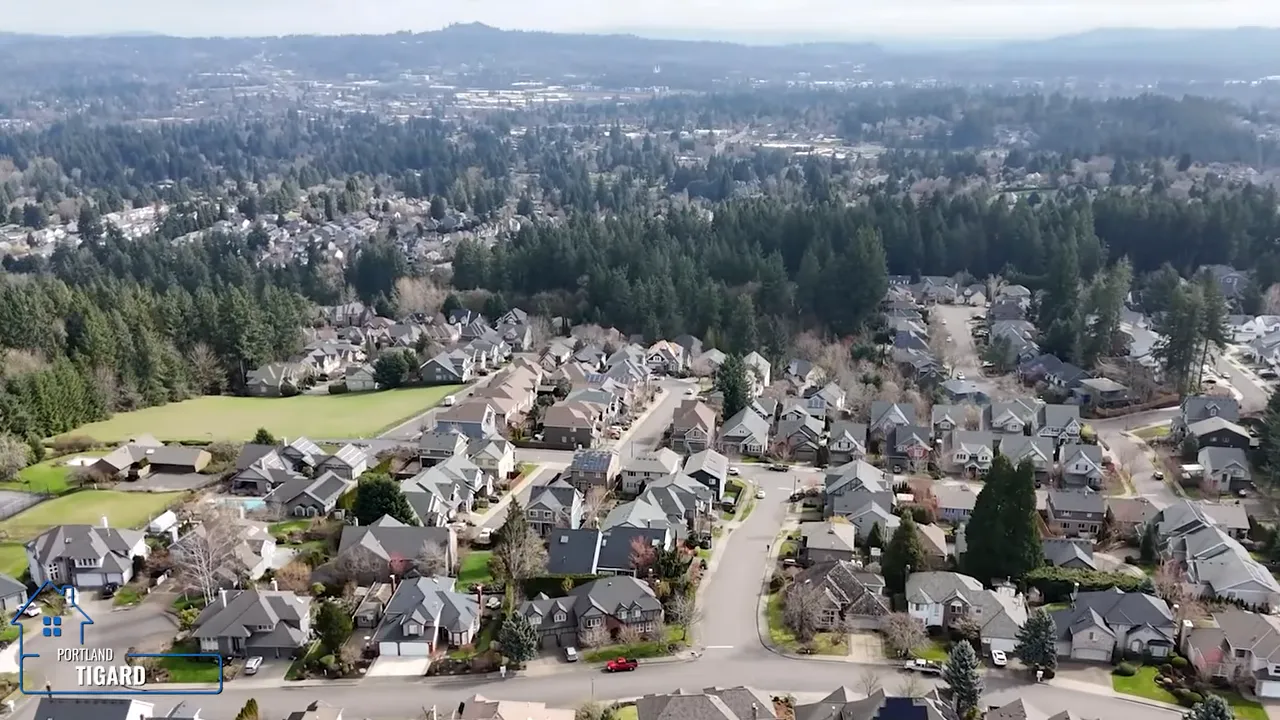
In many ways, Tigard is one of the best values on the west side.
So why does it land on a list of Portland neighborhoods to avoid for some buyers?
Because the commute can be wildly deceptive.
A drive that looks simple on a weekend can turn into a frustrating mess during the week, especially if you need to head into downtown Portland or move across town regularly. Tigard often works beautifully on paper, then starts stealing time once the workweek begins.
Why Tigard works
- Good overall home value
- Solid suburban amenities
- Practical for families who need more bedrooms
- Convenient for west or southbound work locations
Why Tigard can be the wrong fit
- Traffic patterns can turn short distances into long drives
- It is not ideal if your commute is extensive and frequent
- The Tigard-Tualatin School District is solid, but not always enough for buyers chasing top-tier rankings
If your priority is maximizing house size and keeping the budget under control, Tigard can be a fantastic choice. If your priority is protecting every minute of your morning and evening, you need to be much more careful.
This is where pocket-specific guidance matters. In Tigard, shaving 15 to 20 minutes off a commute can come down to which side of the city you choose. That is a huge quality-of-life difference.
Best fit: remote workers, buyers heading west toward Beaverton or Hillsboro, and families who want practical value.
Think twice if: you commute often into Portland, or you are choosing solely for schools and expect elite rankings without compromise.
#4 Beaverton: Big, Convenient, and More Complicated Than It Looks
Beaverton is often the obvious choice for people relocating to the west side. It is close to the Silicon Forest, Nike’s global headquarters, and Intel campuses. On a map, it looks like the center of everything.
That is exactly why it can fool people.
Beaverton is not one neat suburb. It is a huge, varied city made up of countless neighborhoods, price points, school zones, and housing types. Some areas feel polished and resilient. Others feel more vulnerable to traffic, shifting school boundaries, or employer-driven market changes.

The first surprise is internal traffic. Even if Beaverton looks close to your job, crossing the city during peak hours can be rough. The freeway is one thing. Getting off the freeway and through the city is often the bigger issue.
The second surprise is economic concentration.
For years, many buyers treated Nike and Intel as endless engines of local stability. But depending too heavily on a small number of giant employers creates exposure. Corporate restructuring, layoffs, and changing growth patterns can impact not just jobs, but also neighborhood momentum and buyer confidence.
That does not make Beaverton weak. It makes it nuanced.
Why Beaverton works
- Excellent access to major employers
- A true urban-suburban mix
- Strong food diversity
- Wide range of home options
Why Beaverton can be the wrong fit
- It is easy to underestimate internal traffic
- Neighborhood quality varies a lot
- Schools are inconsistent depending on location
- Some areas may be more exposed to employer-related volatility
This is one of the biggest reasons broad lists of Portland neighborhoods to avoid can miss the mark. Beaverton is not a yes-or-no city. It is a city where your exact pocket matters enormously.
Best fit: buyers who want convenience, diversity, and are willing to do the work to identify the right neighborhood.
Think twice if: you are buying based only on proximity to one employer, or you assume every Beaverton school and neighborhood performs the same.
#3 Sherwood: Beautiful, but Very Specific
Sherwood appeals to a very particular dream.
It sits farther out, feels quieter, and attracts people who want that organized, family-centered suburban lifestyle. With a median list price around $725,000, it often pulls in buyers looking for community, good schools, and a little more breathing room.
This is the kind of place where weekend life revolves around parks, kids’ activities, familiar faces, and shared community spaces. Soccer games, hockey practice, local family entertainment, grocery runs to the usual spots, seasonal events. For the right household, that rhythm feels perfect.

For the wrong household, it can feel suffocating.
That is the issue with Sherwood. It is not “bad.” It is just highly specific.
If you are not in a family-focused stage of life, or if you want nightlife, variety, walkability, independent dining, and more spontaneous energy, Sherwood can start feeling limiting pretty fast. It is suburban life in a very concentrated form.
Why Sherwood works
- Strong community feel
- Quiet atmosphere
- Family-oriented amenities
- Good option for buyers who want to be farther out while staying connected
Why Sherwood can be the wrong fit
- Can feel too kid-centric for some buyers
- Less variety in dining and entertainment
- Not ideal for people who want a lively, walkable environment
- May feel too far removed if you need more daily stimulation
Sherwood is peaceful. It is pleasant. It has a lot going for it. It is also one of the clearest examples of why “best suburb” depends entirely on how you want your life to feel.
Best fit: families who want a suburban bubble and genuinely enjoy a tight-knit, routine-driven community.
Think twice if: you crave variety, independent restaurants, nightlife, or a less child-centered environment.
#2 West Linn: Prestige With a Price Beyond the Mortgage
West Linn has a lot of what buyers want when they imagine they have “made it.”
It is consistently seen as one of the safest cities in Oregon. The West Linn-Wilsonville School District is a major draw and ranks among the top in the state. There are dramatic hills, beautiful river views, and a polished, secluded feel that many buyers love.
With median list prices just under a million dollars, West Linn can look like a prestige play that still feels more attainable than Lake Oswego.
But this is one of the most important places where out-of-state buyers need a serious reality check.

The first surprise: property taxes
Many buyers focus on purchase price and monthly mortgage and do not fully account for property taxes. In West Linn, that can be a painful mistake.
Because it is a premium area with high assessed values, annual tax bills can be much higher than expected. It is not unusual for buyers coming from states like Washington to feel serious sticker shock once they see what ownership costs actually look like.
Loving the house but hating the tax bill is a very real West Linn experience for some homeowners.
The second surprise: the hills
The scenery is gorgeous, but topography affects daily life.
Steep roads, winding routes, sloped lots, and steep driveways all sound manageable until winter weather shows up. Oregon may only get one major ice event in a year, but when it does, hillside neighborhoods can feel shut down. If you live at the top, you may not be going anywhere.
Even outside of winter, the geography changes how walkable and easy the area feels. A pretty map does not show how much effort is involved in simply getting around.
Why West Linn works
- Excellent schools
- Strong safety reputation
- Scenic views and prestige
- A more secluded, established feel
Why West Linn can be the wrong fit
- High property taxes can blow up the budget
- Hills affect driving, weather resilience, and walkability
- Not ideal for buyers wanting a classic flat backyard setup
Best fit: families who want top schools, privacy, prestige, and are comfortable with the full ownership cost.
Think twice if: you are budget-stretching to get in, want flatter terrain, or have not fully modeled the tax burden.
#1 Lake Oswego: The Most Misunderstood Market on the West Side
If there is one city that dominates relocation searches, it is Lake Oswego.
It has the school reputation. It has the beautiful neighborhoods. It has the polished downtown with restaurants, coffee shops, and a level of finish that makes it feel like the gold standard of Portland suburban living.
And that is exactly why it lands at number one on this list of Portland neighborhoods to avoid for some buyers.
Not because it is undesirable. Because it is misunderstood.
The biggest misconception is budget.
A lot of buyers call with what feels like an enormous number: $1 million. In much of the country, that is a forever-home budget. In Lake Oswego, it is often a compromise budget.
That can be a shock.
Buyers come in expecting a picture-perfect, move-in-ready home in one of the best pockets of Lake Oswego. What they often find instead is competition, compromise, and hard tradeoffs. You may be fighting for the one house that gives you 75 percent of what you want. Or you may realize that to get the location and schools, you need to give up lot size, updates, or turnkey condition.
Why Lake Oswego works
- Top-rated schools
- Highly desirable lifestyle
- Beautiful suburban character
- Strong amenities and a standout downtown
Why Lake Oswego can be the wrong fit
- Many buyers underestimate how expensive the market really is
- $1 million does not always buy what buyers expect
- Competition can be intense
- You may need to compromise on condition, lot, or layout
This is one of the clearest examples of why broad searches for Portland neighborhoods to avoid should really be searches for Portland neighborhoods to understand before you buy.
Lake Oswego absolutely can be worth it. But it is a buyer-beware market. You need to know the difference between a smart compromise, a money pit, and a home that only works if your lifestyle priorities are crystal clear.

Best fit: families who prioritize school district above almost everything else and are willing to get creative about tradeoffs.
Think twice if: you expect turnkey luxury at the $1 million mark or you are not prepared for the pace and competitiveness of the market.
How to Use This List the Right Way
The point of a list like this is not to scare anyone away from west side suburbs.
In fact, every city on this list can be the right choice for the right buyer. The mistake is assuming the most popular city is automatically the best city.
Here is the framework we use when helping relocators narrow down Portland neighborhoods to avoid for their specific situation:
- Start with lifestyle, not listings. How do you want your weekdays to feel? Quiet and secluded? Walkable and energetic? Kid-centered? Close to work?
- Test the commute honestly. Do not trust weekend drive times or map assumptions.
- Zoom in to the neighborhood level. City-wide reputations can hide huge differences.
- Run the full cost of ownership. Mortgage is only part of the picture. Taxes matter.
- Know your non-negotiables. Schools, lot size, condition, commute, and budget usually cannot all be maximized at once.
If we had to summarize the five cities in one sentence each, it would look like this:
- Tigard: great value, but the commute can get you.
- Beaverton: incredibly convenient, but highly pocket-dependent.
- Sherwood: wonderful for family-focused suburban life, limiting for many others.
- West Linn: prestigious and scenic, but taxes and hills are very real.
- Lake Oswego: elite and desirable, but often misunderstood at common budget levels.
That is the real takeaway. There is no universally best city here. There is only the city that best matches how you actually want to live.
If you’re planning a move to Portland and want a local reality check before you tour homes, call or text 503-804-1466 to talk with our relocation team. We’ll help you narrow down which west-side neighborhoods fit your commute, budget, and lifestyle—so you don’t get blindsided.
FAQs About Portland Neighborhoods to Avoid
Are these actually the Portland neighborhoods to avoid?
Not in the sense that they are bad places. These are better understood as west side suburbs that can be a poor fit for certain buyers. The issue is not quality alone. It is mismatch.
Why does Tigard show up on a list of Portland neighborhoods to avoid?
Tigard offers strong value, but many buyers underestimate how rough the commute can become during the workweek. It is a great fit for some households and a frustrating one for others.
Is Beaverton a risky place to buy?
Beaverton is not broadly risky, but it is complex. Neighborhoods, schools, traffic patterns, and market resilience vary widely. Buying there without researching the exact pocket can lead to surprises.
Who should avoid Sherwood?
Buyers who want nightlife, variety, walkability, or a less family-centered atmosphere may struggle with Sherwood. It shines for households that want a classic suburban community lifestyle.
What is the biggest surprise in West Linn?
Property taxes are a major surprise for many out-of-state buyers. The hilly layout is another one, especially during winter weather or for anyone expecting flatter, easier daily movement.
Why is Lake Oswego so misunderstood?
Many buyers assume a $1 million budget guarantees a turnkey home there. In Lake Oswego, that budget often still involves compromise on location, condition, lot size, or competition.
What is the best way to narrow down Portland neighborhoods to avoid for my family?
Start with your daily lifestyle, commute needs, school priorities, and full budget. Then narrow down to specific neighborhood pockets instead of choosing a city based only on reputation.
When people search for Portland neighborhoods to avoid, what they really need is an honest local reality check. That means understanding not just where homes are located, but how life works once you live there every day.
The right suburb is the one that supports your routine, your budget, your goals, and your next few years. That answer is different for everyone, and that is exactly why surface-level rankings only get you so far.
If you are moving to Portland’s west side, the smartest decision is not choosing the most famous city. It is choosing the one that still feels right after the honeymoon phase is over.
Read More: 12 Things You Must Handle Before Moving to Portland, Oregon