Portland Real Estate in 2026: Who Has the Advantage, Buyers or Sellers?
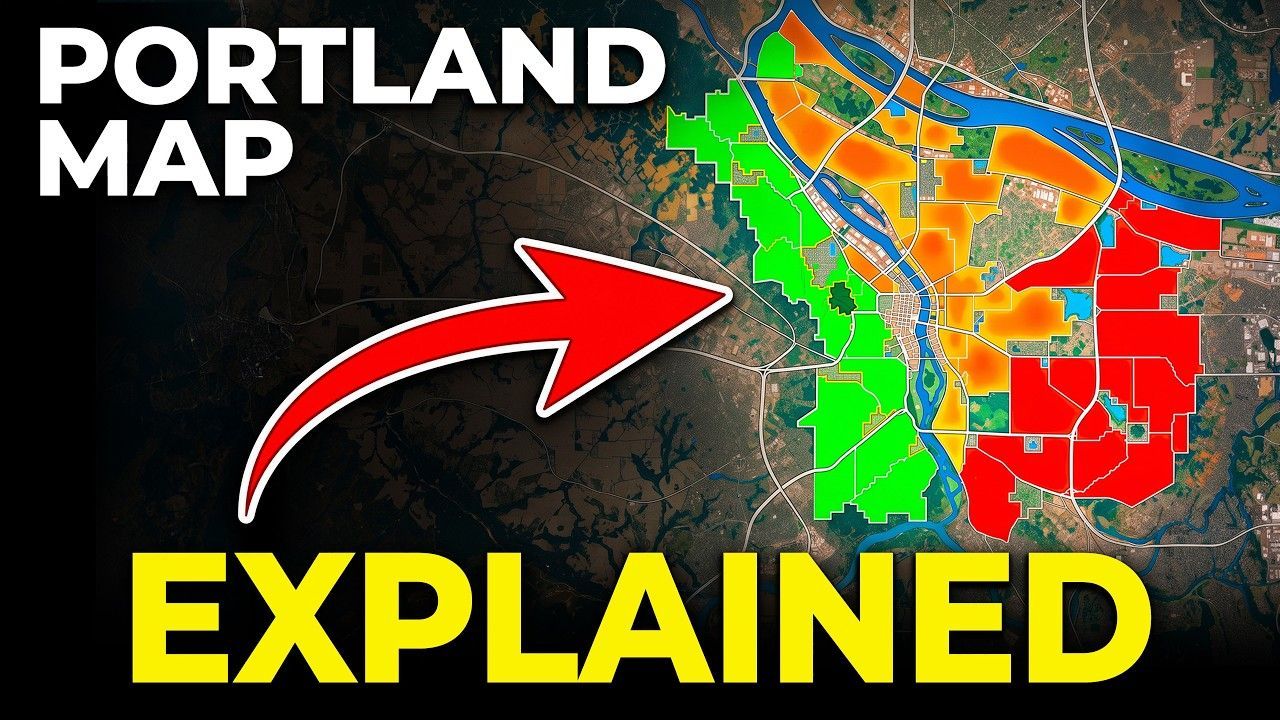
You've probably seen the headlines saying that the housing market is cooling down out here, and honestly, it's not that simple. What I'm watching across the Portland suburbs is not what the national headlines describe. Same metro area, two completely opposite markets happening at the exact same time.
I'm Anne Stewart. I've been selling real estate across the Portland metro area for over 25 years, and my team and I help relocating buyers and local sellers create a strategy around what works best in the Portland market right now. Here's the honest read on what actually has changed over the last 12 months, whether buyers or sellers have the upper hand today, and the one group of buyers quietly running the table.
Think back to what buying a house felt like just a few short years ago in 2021. A listing would hit the market on a Thursday and by Saturday have a dozen offers on it. Money was super cheap and everybody was acting like it. I would gather to say it was practically free at those interest rates. Then the interest rates started to slowly rise. Sellers who could have named their own price a few years earlier were suddenly just sitting on market three weeks, four weeks, no offers, then a price reduction, and now another price reduction. If you listed your home last year and it sat on market and you've been quietly wondering what you did wrong, I want you to hear this clearly: the market moved right underneath you while your sign was still in the yard.
Table of Contents
- The Two Forces That Flipped the Portland Market
- Lake Oswego: Why This Suburb Still Holds Strong in a Softening Market
- Softening vs. Falling: What's Actually Happening to Portland Home Prices
- Who Has the Leverage Right Now (and Why Cash Buyers Are Winning)
- For Sellers: Why This Market Rewards Honest Pricing and Punishes Testing the Waters
- What Happens Next: My Take on Portland Real Estate in 2026
The Two Forces That Flipped the Portland Market
What actually caused this market to flip? It wasn't one thing. It was two things landing at the exact same time.
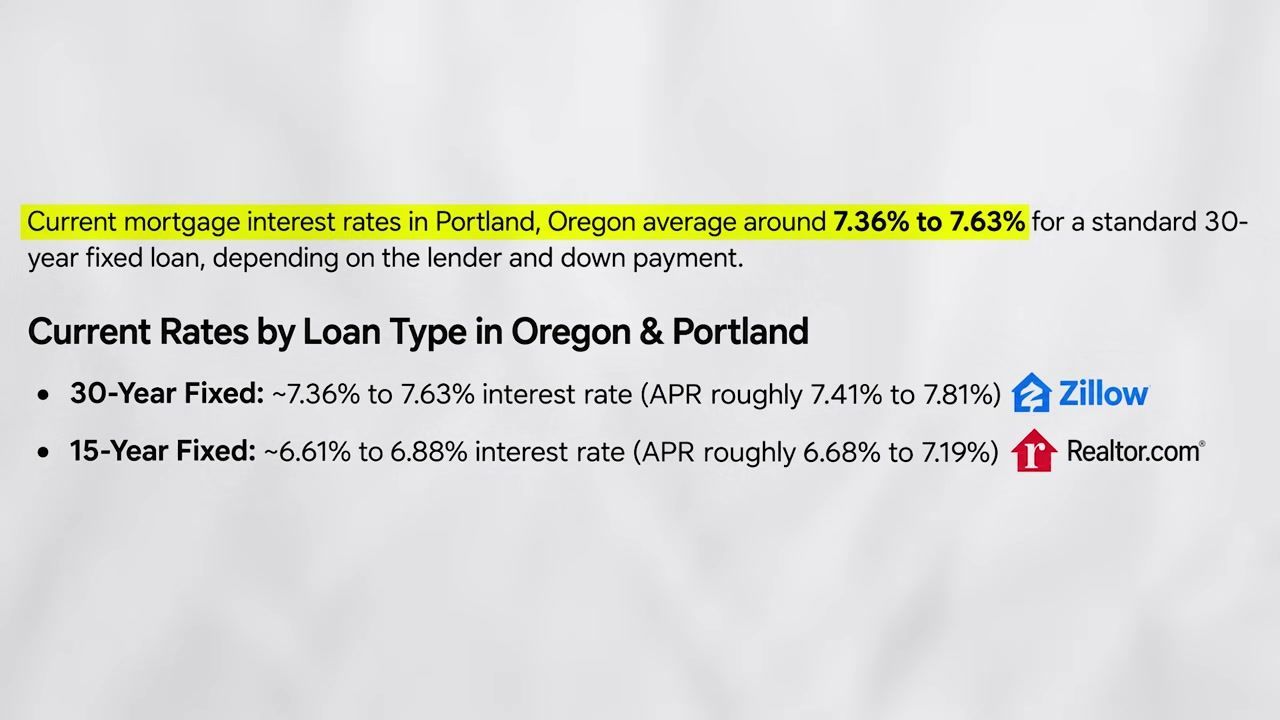
First, rates went up, and not a little. We're sitting around 7.5% right now as I do this video, and that cooled buyers' urgency in a hurry. The buyer who could stretch to $1 million suddenly couldn't, and that buyer went quiet or had to readjust their entire home search substantially.
Second, Portland got a wave of new construction and resale inventory hitting the market right when affordability was stretched thin. More homes for sale, fewer buyers in a rush, and every single one of those remaining buyers is suddenly doing the math on a 7.5% interest rate. That changes everything. If a buyer can't see on day one that your home is the best deal out there on the street, they don't even write an offer, and more than likely they won't even come to see you.
You can see all of this most clearly in the suburbs right now. There's more inventory there than there has been in a long time, and a lot of these homes are older. So you've got these big, beautiful 1990s homes on a great lot competing head to head against new construction. And buyers are far pickier about condition than they were just three years ago.
Now, this is not a crash. Portland's fundamentals haven't gone anywhere. We still have job growth. We still have people moving here from much more expensive markets. What changed isn't demand. What changed is leverage. And figuring out who actually holds it right now is what every decision you make this year depends on.
Lake Oswego: Why This Suburb Still Holds Strong in a Softening Market
Lake Oswego is still holding really strong because it's Lake Oswego. You've got the lake, you've got walkability, you've got schools that a lot of buyers are fighting to get into. Even in a market where other suburbs are seeing homes sit for 30, 60, even 90 days, Lake Oswego continues to show resilience.
What makes Lake Oswego different right now? It comes down to the fundamentals that don't shift when interest rates climb. Buyers are still competing to get into the school district. Lake access and walkability drive demand in a way that holds up even when affordability gets squeezed. The homes that do come on the market in Lake Oswego are still moving, and they're holding value in a way that a lot of other Portland suburbs are not.
This is the kind of area that weathers market shifts better than most. When rates were low and everything was selling in days, Lake Oswego was desirable. Now that rates are high and inventory is sitting longer across the metro, Lake Oswego is still desirable. That consistency matters, especially if you're relocating to Portland and trying to figure out which suburb is going to protect your investment over the long term.
If you're a buyer looking in Lake Oswego right now, you still need to be prepared. This is not the pocket where you're going to find desperate sellers slashing prices. The negotiating room here is narrower than in other parts of the metro. But if schools, walkability, and long-term value are your priorities, Lake Oswego is one of the few places in the Portland area where those boxes still get checked even in a 7%+ interest rate environment.
Softening vs. Falling: What's Actually Happening to Portland Home Prices
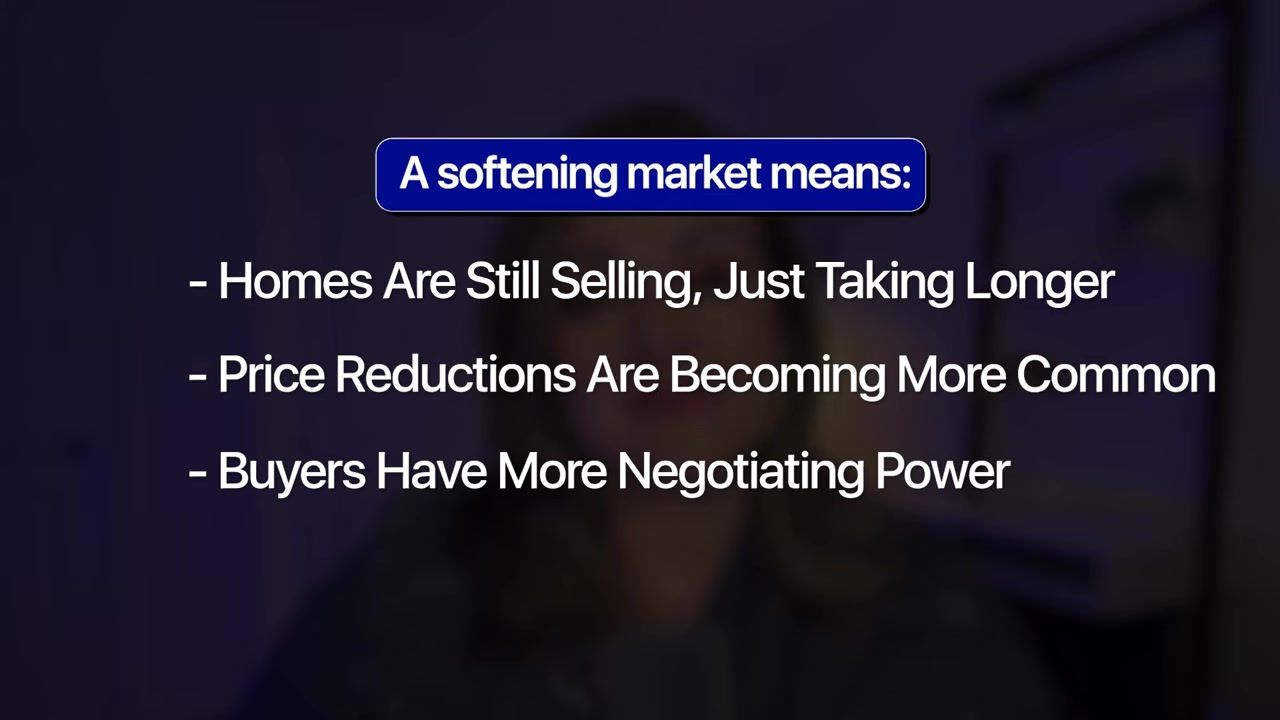
There's a difference between a market that's softening and a market where home values are actually coming down. A softening market basically means that we are still selling houses. They're just taking longer. You're going to see some price reductions and buyers getting a little more leverage in negotiating. That's softening.
But prices actually coming down is very different. That starts happening when there are simply too many factors putting pressure on the market at the same time, and the only factor that can really adjust is the price. Think about what happens when interest rates stay high for too long. Affordability gets squeezed, fewer buyers can qualify or are willing to make a move, inventory starts sitting and stacking up, and fewer transactions are happening between buyers and sellers. And the people that have the equity to go buy, even despite the high interest rates, they can't get their houses sold. Eventually, that creates real downward pressure.
If rates come down enough to improve affordability, the market can begin to normalize. And if rates fall enough, it becomes a meaningful number for a lot of buyers to enter back into the market. And then it kind of creates a surge in demand because there's always a lot of pent-up buyers waiting for affordability. And when demand starts outpacing supply again, that downward pressure on prices starts disappearing, and eventually prices can start moving back up.
Now, am I telling you rates are definitely going to come down? Absolutely not. I don't know, and neither does anyone else on YouTube. What I can tell you is that higher rates are one of the biggest reasons this market has slowed down in the first place.
So the next question is, is inventory going to keep climbing? There's generally more to choose from across the burbs than there was even a couple years ago. We just got our new market action reports from the MLS that shows last month it rose to 4.2 months of inventory. So basically that means if no other homes came on the market, we would sell out in 4.2 months. But again, this is where you have to be really careful with broad headlines. Some pockets have considerably more inventory sitting for months, and other areas, especially well-priced homes in desirable locations and price points, can still move quickly.
Who Has the Leverage Right Now (and Why Cash Buyers Are Winning)
Which brings us to the question that probably matters most: who has the leverage right now? And the answer is, it completely depends on the neighborhood, the price point, the condition of the house, how much competing inventory is sitting around there, and whether you're paying cash or you need financing. That's the nuance that gets lost in the national headlines.
If you're buying a home right now, I know exactly what's keeping you awake at night. What if you buy and then the prices drop another 5% next year? Here's what you need to be aware of. You've never had so much leverage. Prices are softer, and that means you're not buying at premium prices. You can take your time and find something that makes sense for you. You can write in offers that make sense for you with your terms. And this was not the case for the last few years.
Now, here's how to actually use this. Watch the days on market. Once a home has been sitting for 30, 40, 60 days, that seller's starting to get real nervous. That's your moment to write your offer. The negotiating room is in the older inventory and the higher price brackets, areas where they've been sitting for a long time.
Cash Buyers Have the Strongest Position in Years
I want to stop here and talk to one specific group of buyers watching this because the leverage you have right now in this market has not been this strong in years. If you're a cash buyer, meaning you don't need any money from the bank to buy your next house, this market right now is yours.
And here's why that matters so much more today than it did two or three years ago. In the past few years of a mostly seller's market, being a cash buyer almost didn't matter because lenders had their pre-approvals just like cash. They fully underwrote the buyer, maybe subject to appraisal, or they waived the appraisal, or they released their appraisal contingency. They locked in the rates, and a well-prepared financed buyer could close in two weeks just like you.
This is not that market anymore. Two big things have changed. First, rates. When mortgage rates jump substantially like they just have, the industry just saw 1.3 million buyers knocked out of the qualification game nationwide. Second, new appraisal standards are going to be taking effect quickly in November. These are significant and they're going to make the finance side of the transaction slower, pickier, and more fragile.
Put those two things together and cash is once again king. Right now I'm seeing something I haven't seen in a long time. Equity-rich sellers who are moving into a next chapter home, a smaller place, maybe a one-level or main-level living, moving closer to family, are coming to the table with cash in hand because they already own their current home outright. And when a cash offer walks into a listing on day 45 that has already had a price reduction or two, that magic that happens is really powerful. The seller sees certainty: no lender, no appraisal risk, no financing contingency, no 60-day waiting around if underwriting is going to come back clean. That cash offer can be very appealing for a seller who needs certainty.
Here's what I tell you to look for: days on market. A lot of sellers are scared to reduce the price because they want room to negotiate, so heck, give the seller an opportunity to refuse you. I've seen some crazy things happening when a seller is exhausted, shopworn, and they're ready to talk.
For Sellers: Why This Market Rewards Honest Pricing and Punishes Testing the Waters
For sellers, I'm going to say something you may not enjoy hearing. Before you list in this market, you need to ask yourself one honest question: do you need to move? Because this is not a market for sellers who are testing the waters. This is a market for sellers who have a real reason to sell.
The market right now is not fair, and that is the single most important thing I can tell you if you're thinking about selling, whether at the end of 2026 or 2027. If these interest rates remain in the 7% range, it is not fair that your neighbor sold the same floor plan two years ago for $100,000 more. It is not fair that your tax assessment may say one number and the buyer pool is willing to pay another. It is not fair that you did everything right and the market still shifted underneath you.
But the market is honest. It tells you exactly what buyers are willing to pay every single day in the days on market, in the price reductions, and in the silence when your listing is overpriced. And the sellers who win in this market are the ones who listen to that honest signal instead of fighting it.
Your list price is not the price you want. Your list price is the price buyers are willing to pay. If you thought buyers were price sensitive before rates jumped to 7%, they are now more sensitive than ever. They are only looking for value, and that is it. You cannot price above the market anymore. You have to price ahead of the market.
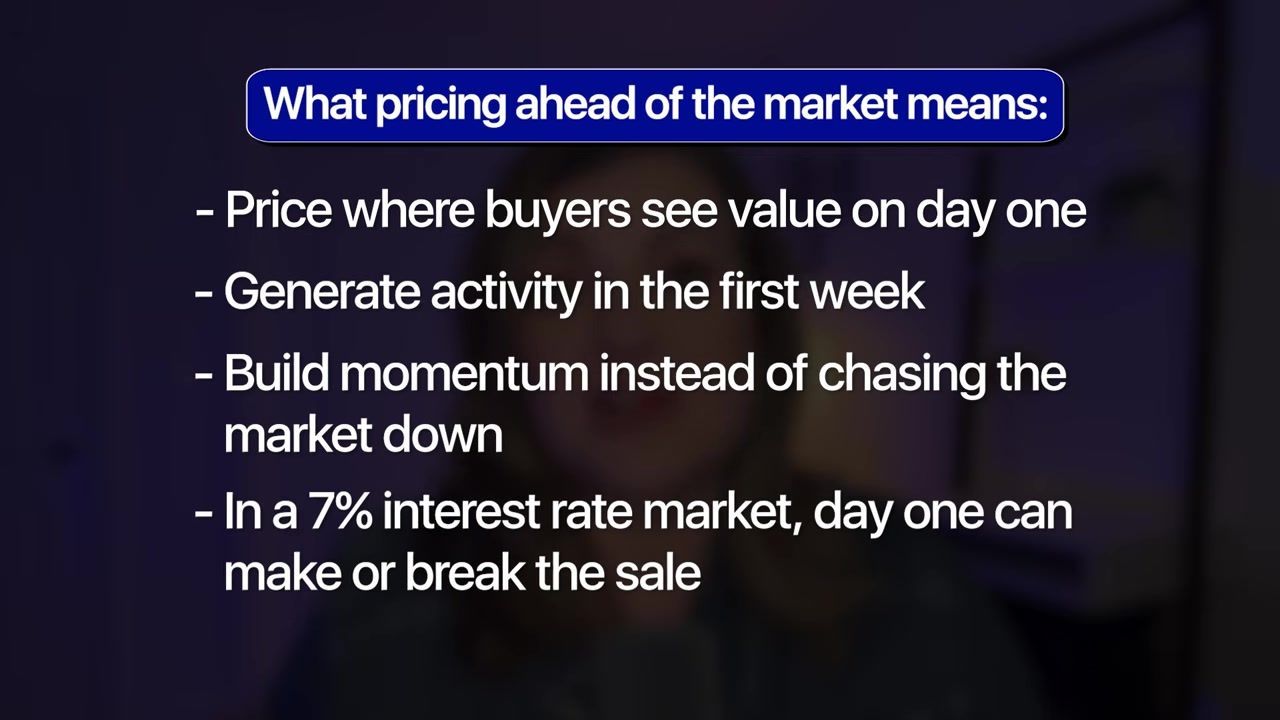
Pricing ahead of the market is different. It means pricing where the buyer will see the value on day one, where the home gets activity in the first week, where you create your own momentum instead of chasing the market down. And in a 7% interest rate environment where every buyer is looking for a reason to say no, day one is where the whole sale is won or lost.
Why the Agent You Hire Matters More Than Ever
The agent sitting across the table from you is the single biggest variable in what you walk away with. This is not a market for amateur hour. We are watching a lot of agents who got licensed during the COVID years genuinely struggle in this market. They've never seen a market like this. Experience is not a nice-to-have right now. It is the whole thing.
Here's the honest part: guess wrong on your first list price in this market and you don't just lose a few thousand, you lose months of time and you lose tens of thousands at the finish line. The sellers who called me this year after firing another agent, every single one of them had the same story. They handed them a one-page CMA with a citywide average, priced accordingly, and then sat for months wondering what the heck's going on. This is the cost of hiring the wrong agent in this type of market.
And if you are a seller and you need help getting this right the first time, reach out, because nothing is worse than having your house sit on the market day after day after day. An honest take, a specific strategy, because honestly, a lot of houses need their own positioning in the market. It's not just a one-size-fits-all. And we'll build a strategy around the number buyers will actually pay attention to for your house, not the number you'd like to see, because that is the only strategy that works at 7%+ interest rates, and it only works in the hands of somebody who's done it before. Before you list, not after.
What Happens Next: My Take on Portland Real Estate in 2026
Here's what I actually think happens from here, and I'll put my name on it. I do not think prices fall off a cliff. I think areas that are consistent will stay consistent. Lake Oswego holds because it always does. The genuine negotiating room over the next several months is in areas that were already hit when rates were in the 6% range. Higher-end homes where there's a glut of inventory and where new construction's being built out in the droves and they're competing with resale, every one of those will feel a pinch.
Entry-level buyers, you may be surprised that the price range you're in, if you're in the $400,000 to $600,000 range, you may not see it get hit so badly. Now, one thing that could change the read on all this: a real move in interest rates in either direction. Rates drop, the sideline buyers come back all at once, and the leverage evaporates overnight. Rates climb and the softer pockets get softer. And when those new appraisal rules land in November, the finance side of the market gets tighter, which only sharpens the advantage for the cash buyers.
Who Should Buy or Sell Right Now
The question I keep getting more than any other is, is it the right time? Now, if you're relocating here for a job and you need somewhere to live, yes, maybe. If you're a cash buyer, unambiguously yes, this is your window. If you're a seller, I'm going to say this one more time because it matters: only sell if you need to, not want to, not hope to, need to. Price it ahead of the market, not above it. Hire somebody who actually has done this before in hard markets and then move.
But if you're just testing the waters, and you have no real pressure to sell or move, this is probably not your market. Maybe wait it out a while. Who else should wait? If your home in another state has not sold yet, or if your job isn't settled, or your budget only works if you assume that you can refinance later, wait. Get your position solid first. I've seen people force the move before they're ready and regret it for years.
Everything I just told you changes depending on which of these two markets you're standing in, and most people genuinely can't tell from a listing site which one they're in. The buyer with the real leverage and the buyer with none are looking at nearly identical photos. Get that wrong as a buyer and you overpay a lot on a home that could have been negotiated. Get it wrong as a seller and you could spend months and months chasing your own price down. Miss it as a cash buyer and you leave your single best advantage on the table.
If you're thinking about buying or selling in the Portland metro, let's talk. My team and I have over 37 years of combined experience in this specific type of market, and we have the receipts to prove it. It's easy to book a call with us or get on a Zoom anytime. We'll look at your specific situation and make sure you do this in a solid way.
Frequently Asked Questions About Portland's 2026 Housing Market
How much inventory does the Portland metro have right now?
As of the latest market action reports from the MLS, the Portland metro area has 4.2 months of inventory. That means if no other homes came on the market, we would sell out in 4.2 months. But this number hides a lot of variation. Some pockets have considerably more inventory sitting for months, while well-priced homes in desirable locations and price points can still move quickly.
Why is Lake Oswego holding value better than other Portland suburbs?
Lake Oswego has the lake, walkability, and schools that a lot of buyers are fighting to get into. Even when affordability gets squeezed by high interest rates, those fundamentals don't shift. Buyers are still competing to get into the school district, and lake access drives demand in a way that holds up even in a softening market. That consistency makes Lake Oswego more resilient to market shifts than other suburbs.
Should I wait for interest rates to drop before buying in Portland?
No one knows when or if rates will drop. What I can tell you is that if you're waiting for rates to fall, so is everyone else. When rates do drop enough to improve affordability, the sideline buyers come back all at once and the leverage you have right now evaporates overnight. If you're a cash buyer or you can afford to buy now, this is your window to negotiate and take your time finding something that makes sense.
What kind of homes have the most negotiating room right now?
Watch the days on market. Once a home has been sitting for 30, 40, 60 days, that seller's starting to get real nervous. The negotiating room is in the older inventory and the higher price brackets, areas where they've been sitting for a long time. Higher-end homes where there's a glut of inventory and where new construction is competing with resale will feel the most pinch.
Is this a good time to sell my Portland home?
Only sell if you need to, not want to or hope to. This is not a market for sellers who are testing the waters. If you have a real reason to sell (job relocation, downsizing, moving closer to family), then yes, but you need to price ahead of the market, not above it. Your list price is not the price you want. Your list price is the price buyers are willing to pay. In a 7% interest rate environment where every buyer is looking for a reason to say no, day one is where the whole sale is won or lost.
Why do cash buyers have so much leverage in the Portland market right now?
Two big things have changed. First, when mortgage rates jumped to 7.5%, the industry saw 1.3 million buyers knocked out of the qualification game nationwide. Second, new appraisal standards taking effect in November are going to make the finance side of the transaction slower, pickier, and more fragile. Put those two things together and cash is once again king. When a cash offer walks into a listing on day 45 that has already had a price reduction or two, the seller sees certainty: no lender, no appraisal risk, no financing contingency, no 60-day waiting around. That cash offer can be very appealing for a seller who needs certainty.