There is a lot of noise around why people are leaving Portland. Some headlines make it sound like the entire metro is emptying out. That is not what is happening on the ground. Portland has real challenges with taxes, affordability, employment shifts, population movement, and political fit. But it also has distinct neighborhoods and suburbs where demand remains incredibly strong.
If you are thinking about moving to Portland, selling a home here, or making a move within the metro, the honest tradeoffs matter. This is not a one market city. The answer depends heavily on your income, work situation, lifestyle, political preferences, and the specific neighborhood or county you choose.
1. Oregon Tax Shock
The first surprise for many relocating households is Oregon income tax. People moving from California often assume they will automatically get a large tax break. California has a top state income tax rate of 13.3%, while Oregon tops out at 9.9%, so at first glance Oregon looks like the easy winner.
The issue is how quickly Oregon reaches that top rate. The 9.9% bracket begins at $125,000 for a single filer and $250,000 for married couples filing jointly. California reaches its highest bracket at a much higher income level. Depending on deductions and filing status, a household earning roughly $100,000 or more may actually pay more in Oregon state income tax than in California. In some situations, that difference can be well over $1,000 annually.
For anyone coming from Texas, the adjustment is even more direct. Texas has no state income tax, while Oregon has a top rate of 9.9%. That needs to be built into the monthly budget before a mortgage payment is chosen.
There is another side of the ledger, though. Oregon has no sales tax, which can save a household thousands of dollars each year depending on spending. Oregon also does not tax Social Security benefits, which can improve the overall picture for retirees whose income relies significantly on Social Security.
A March 2026 Common Sense Institute report ranked Oregon as having the second highest household income tax burden in the country. The point is not that Oregon cannot work financially. It absolutely can. The point is that moving to Portland requires running the real numbers rather than relying on a headline tax rate.
2. Portland Job Market Changes
Portland has long been known as the Silicon Forest. Nike, Intel, Adidas, semiconductor firms, and manufacturing employers created a powerful economic backbone across the metro. In 2025, that backbone took a hit.
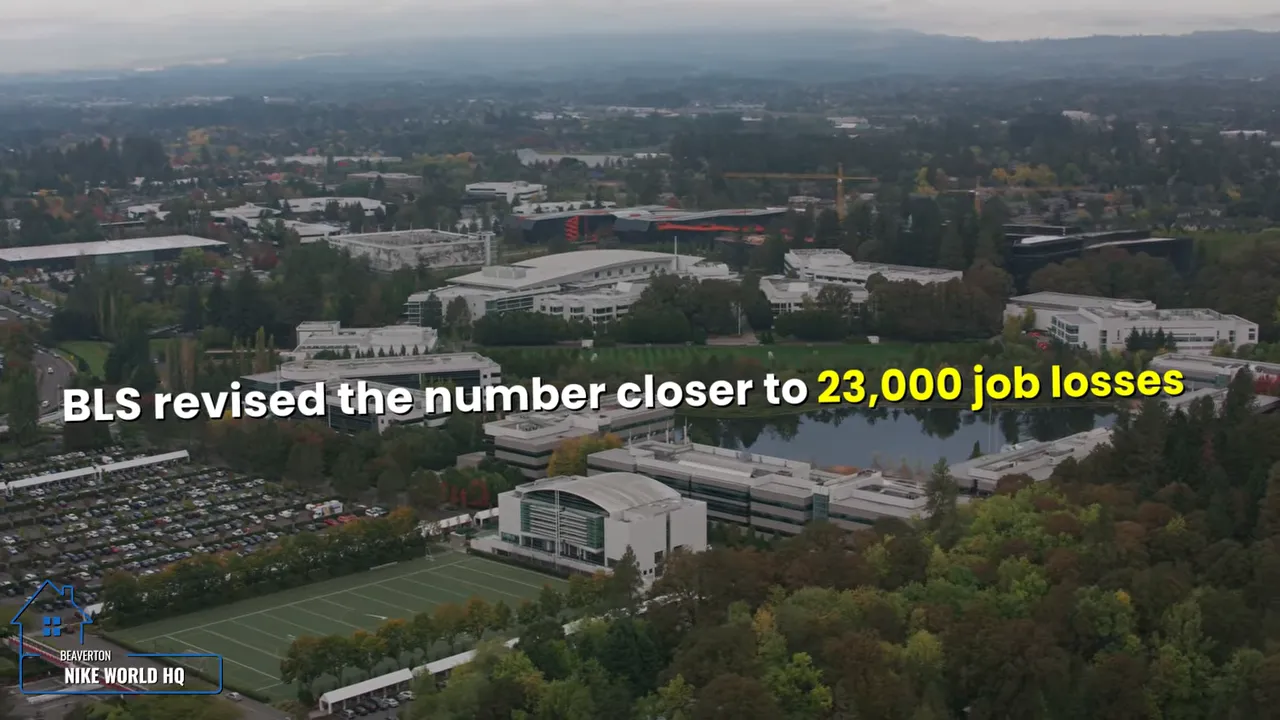
One economic report estimated that Portland lost around 8,800 jobs in 2025 while national employment grew. Bureau of Labor Statistics data later put the decline closer to 23,000 jobs through January 2026. Nike announced 740 job cuts, while Intel announced 4,500. When employers of that size pull back, the effect reaches well beyond their campuses and into surrounding local businesses and services.
This is one of the clearest reasons why people are leaving Portland, particularly when a household depends on a local job offer. Metro unemployment was around 4.9% in early 2026, above the national average. That is not a disaster, but it is a real sign that the local employment market softened.
If a job is bringing you here, do your homework on the specific employer and its long term Portland commitment. Do not make a major housing decision based on a job offer alone without understanding the company’s footprint and the broader industry.
For remote workers, the story can look very different. Around 10% of Portland area roles are fully remote, compared with 6% nationally, and hybrid work has become common. Many offices in downtown Portland and Beaverton ask for two or three days in person each week. That flexibility opens up housing options well beyond a short commute from Nike or Intel.
3. Portland Cost Of Living
Affordability is another major answer to why people are leaving Portland. Oregon was ranked the fifth least affordable state in the country in a March 2026 Common Sense Institute report using federal data. Since 2019, Oregon households have spent about $18,300 more per year to cover basic needs. The national increase was about $15,400.
A May 2025 Oregon Values and Beliefs Center poll found that nearly 70% of Portland residents identified affordability as their biggest dissatisfaction with the city. Not traffic. Not safety. Affordability.
Still, value is relative. Portland’s cost of living is estimated to be 51% lower than San Francisco, 22% lower than Boston, and 40% lower than New York City. For a buyer arriving with substantial equity from a Bay Area home sale, Portland can still feel like a strong value even after accounting for Oregon income taxes.
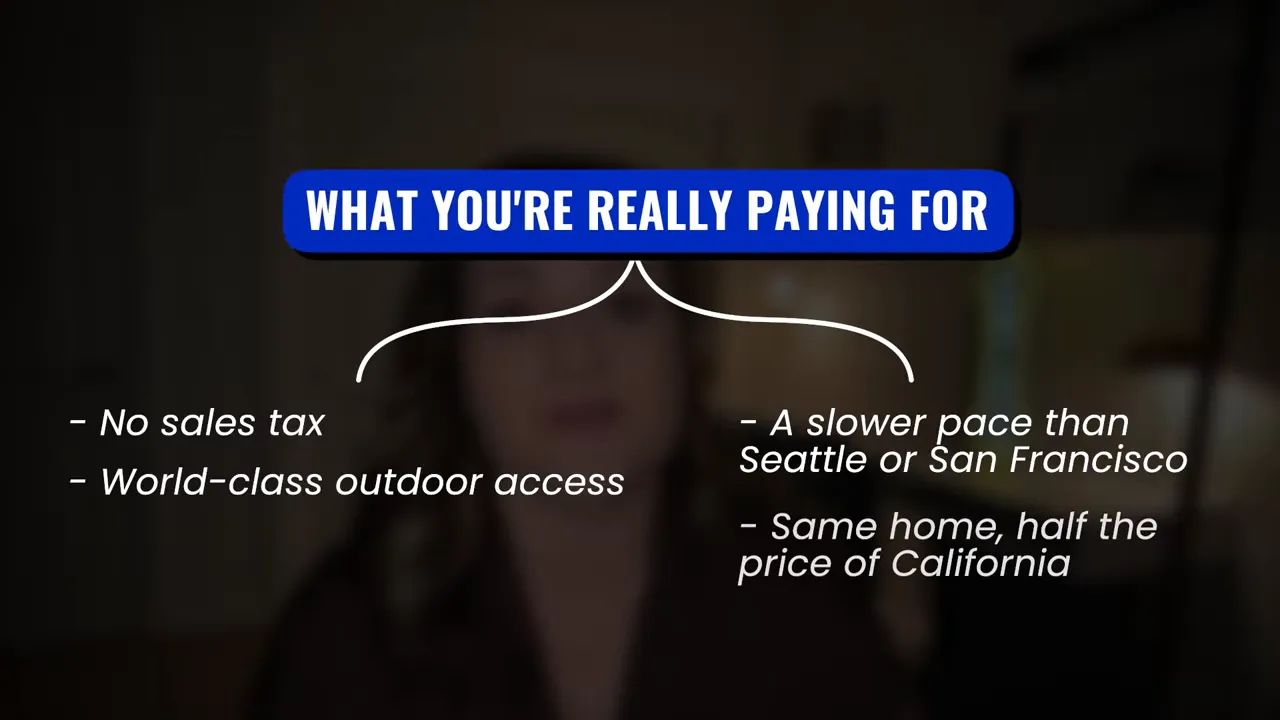
What are people paying for here? A different quality of life equation:
- No sales tax
- Access to trails, mountains, rivers, and the Oregon Coast
- A slower overall pace than San Francisco or Seattle
- Homes that can cost far less than comparable homes in major coastal cities
Portland is not inexpensive. But for the right household, the value can absolutely be there. That is why moving to Portland is still attractive to many buyers even as others decide to leave.
4. Portland Population Shifts
The population story is real. More than 130,000 Oregonians moved out of state in a single year according to the 2024 American Community Survey. Portland lost its position as the nation’s 25th largest metro to Austin, and Multnomah County ranked 94th out of the 100 largest counties for population growth.
ECONorthwest reported that more than $1 billion in income left Multnomah County for other parts of the country in each of the last two years. When high earning households leave, tax revenue leaves with them. That can pressure public services, impact quality of life, and create a difficult cycle.
But this is where the national narrative gets only half the story right. One of the biggest reasons why people are leaving Portland is not necessarily that they are leaving Oregon or even the Portland metro. Many are leaving the city core or Multnomah County and moving to Washington County, Clackamas County, suburban communities, or rural areas nearby.

Lake Oswego, West Linn, Tigard, and Sherwood remain important examples of this shift. Lake Oswego recorded 178 home sales in May, up from 153 during the same month the prior year. Sherwood recorded 78 sales in April, up from 71. The volume in these markets is not disappearing.
People are still coming from California, Texas, and Florida. Others are simply relocating within the region for a different tax environment, more space, a suburban setting, or greater distance from the uncertainty they feel in the city core. So when asking why people are leaving Portland, it is essential to ask: leaving which part of Portland, and going where?
5. Political And Cultural Fit
Not every move is financial. Political and cultural fit is a very real factor for some people, and it has been since the COVID era. There is no right or wrong political direction here. The important thing is understanding what people are actually doing in the market.
Some residents closer to retirement feel that Portland has changed substantially over the past five, 10, or 15 years. They do not want to wait another decade to see whether the city changes again. Others feel their personal political preferences are no longer mainstream in Multnomah County, so they choose a community that feels more aligned with how they want to live.
Again, this does not always mean leaving the state. Some relocate to other counties in the metro, to smaller communities, to rural Oregon, or farther south. The Portland metro is not politically uniform. It is a spectrum, and moving to Portland successfully means understanding the specific county and community, not treating the entire region as one place.
If political fit matters to your household, be direct in your research:
- Review voting patterns and recent local election results.
- Spend meaningful time in the communities under consideration.
- Consider county lines, not just city names.
- Match your daily lifestyle to the neighborhood rather than relying on broad Portland headlines.
Advice For Buyers Moving To Portland
For buyers, the biggest takeaway is simple: Portland is many markets, not one market. The opportunities are very neighborhood specific. Some pockets are seeing price reductions and room for negotiation, while other neighborhoods move quickly when a well prepared home is priced correctly.

Before moving to Portland, create a clear plan around your budget, work location, desired commute, lifestyle, and preferred home type. Do not spend $1 million on a home in the wrong area only to discover that it does not support how you actually want to live day to day.
A solid buying strategy should include:
- Knowing the total tax impact before setting a price range
- Researching neighborhoods that fit your lifestyle and budget
- Understanding whether a local job, hybrid schedule, or remote work drives location
- Tracking conditions in the precise market segment you want
- Preparing to negotiate where the market gives you room
There are real opportunities here for prepared buyers. The key is making a decision based on micro market conditions, not a sweeping conclusion about why people are leaving Portland.
Advice For Sellers In The Portland Market
Sellers need to be especially careful with pricing. Homes that get it right from day one often sell close to list price. Homes that start too high and then require a price reduction can sell for roughly 5% less than they might have achieved with the correct initial strategy. On a $1 million home, that is potentially $50,000 left on the table.
The June 2026 market report reinforced the same principle: correctly priced, professionally marketed, move in ready homes still attract strong interest. Buyers are very particular because money is expensive. Presentation and pricing are not optional details.
There is also an important supply story. New construction has dropped substantially. Only 656 multifamily units were permitted in the Portland metro in 2025, compared with more than 2,000 in 2023. That reduced pipeline means new inventory is not replacing what sells, particularly for scarce single level homes on the west side.
This does not mean a seller can name any price and expect the market to follow. It means there is a structural floor under supply in certain segments. A home still needs the right price, the right preparation, and a real launch strategy.
Historic Neighborhoods Still Hold Their Value
Inner northeast and southeast Portland remain a bright spot. Irvington, Alameda, Sellwood, and Laurelhurst have long carried strong demand, and that has not slowed down. A well priced historic Craftsman, Portland four square, or bungalow on a tree lined street near coffee shops, restaurants, and parks can still draw multiple offers in the first weekend.
The supply is finite, and buyers know these homes cannot simply be recreated in a new subdivision. If you own one of these properties, do not over modernize it and erase the character that made it special. Original details that may look dated to one person are often exactly what another buyer will pay a premium for.

Preserve the charm, present it thoughtfully, and price it right from day one.
Why People Are Leaving Portland Is Only Part Of The Story
Yes, people are leaving Portland. They leave every year for taxes, jobs, affordability, lifestyle changes, politics, retirement, and personal reasons. But people are also moving into Portland, moving within Portland, and competing for the right homes in the right suburbs and historic neighborhoods.
The important question is not just why people are leaving Portland. The important question is whether the specific neighborhood, tax picture, job situation, and lifestyle fit your goals. Getting that wrong can create a $50,000 to $100,000 mistake, or lead to a move that needs to be reversed a couple of years later.
Make the decision with your eyes open. Know the tradeoffs. Build the strategy first. Then decide whether Portland is the right move for you.
Thinking about moving to or from Portland? Let’s talk before you make the move. I can help you evaluate the neighborhoods, housing market, and lifestyle tradeoffs so you can make a decision based on your goals—not just what you’re hearing online. Reach out to me at 503-804-1466 to start the conversation.
Frequently Asked Questions About Moving To Portland
Are people really leaving Portland?
Yes, some residents are leaving Portland and Oregon, driven by affordability, taxes, job changes, and cultural fit. However, many households are relocating from the city core or Multnomah County to suburban areas in Washington and Clackamas counties rather than leaving the metro completely.
Is moving to Portland still affordable compared with California?
Portland is not low cost, but it can be significantly less expensive than San Francisco and other major coastal cities. Buyers should account for Oregon income tax, housing costs, and their individual spending before deciding.
Which Portland area suburbs are seeing demand?
Lake Oswego, West Linn, Tigard, and Sherwood are examples of suburbs seeing continued buyer activity. The right location depends on budget, commute needs, desired lifestyle, and the type of home you want.
What should Portland sellers focus on?
Sellers should focus on accurate initial pricing, thoughtful preparation, strong marketing, and understanding demand in their exact neighborhood. Historic homes in sought after inner northeast and southeast neighborhoods can perform especially well when their original character is preserved.