Anyone seriously considering moving to Portland has run into the same headlines. People left. Multnomah County lost residents. Taxes became a real issue. Some major employers cut jobs. None of that should be brushed aside.
But if we are going to talk honestly about moving to Portland, we need to talk about the whole picture, not just the scariest version of it.
Yes, parts of Portland struggled. Yes, some households decided the math or the timing no longer worked for them. At the same time, the broader metro kept attracting buyers, especially into westside suburbs where demand has remained surprisingly resilient. That difference matters more than most headlines let on.
If you are weighing moving to Portland in 2026, the real question is not whether anyone left. The real question is whether this market fits your income, work setup, housing goals, and lifestyle priorities.
Table of Contents
- Why the headlines about Portland are only partly right
- Reason 1: Taxes are a real factor
- Reason 2: Remote work changed the relocation game
- Reason 3: Major employer layoffs hit the region
- Who is still moving to Portland
- What is keeping home prices supported
- When moving to Portland makes sense
- When moving to Portland does not make sense
- Our honest verdict
- FAQ: Moving to Portland
Why the headlines about Portland are only partly right
One of the biggest mistakes people make when researching moving to Portland is treating the city of Portland, Multnomah County, and the entire metro area like they are all the same thing. They are not.
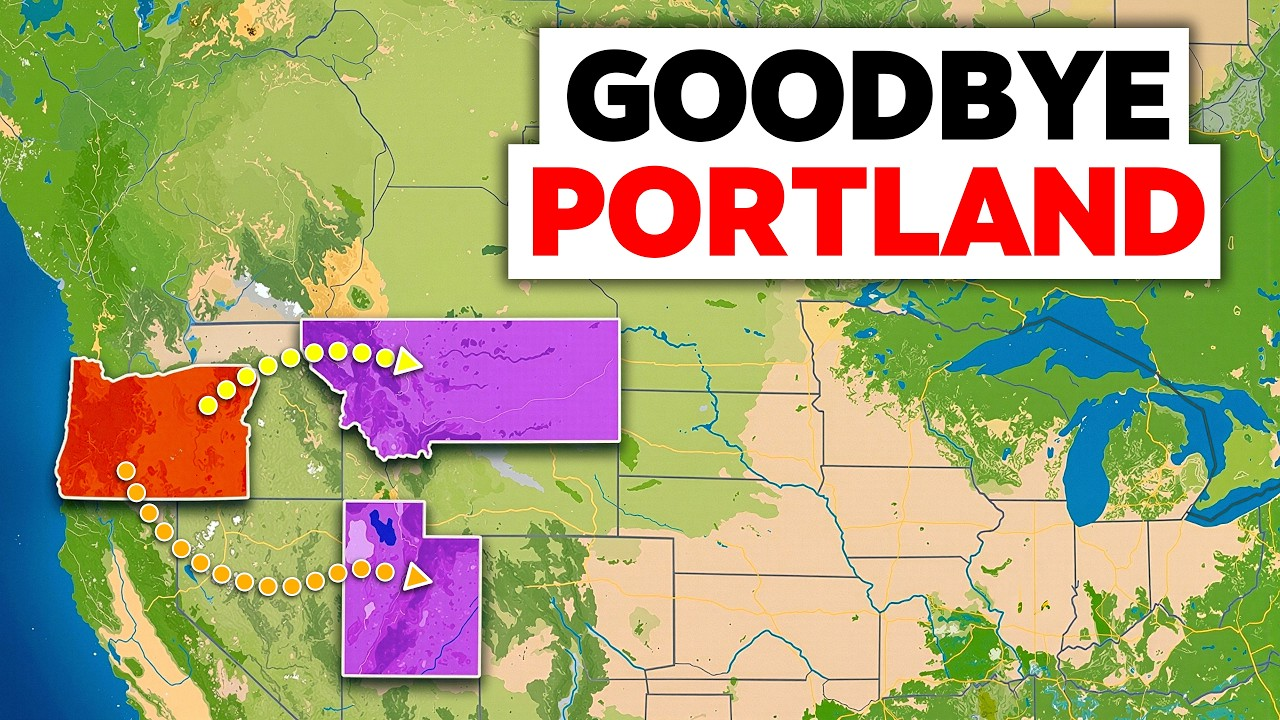
From 2020 through 2024, Multnomah County did post a meaningful net population loss, nearly 16,000 residents. That part is real. If you paused after reading that, you were not overreacting. A lot of people did the same thing.
But the broader Portland metro, including Washington County and Clackamas County, told a different story. The metro as a whole still grew and moved past 2.5 million residents in 2024. That means the outflow story was much more localized than many people realized.
That distinction matters because a lot of buyers considering moving to Portland are not actually planning to live in the urban core. They are comparing places like Beaverton, Tigard, Sherwood, Lake Oswego, and West Linn.
Those westside markets have behaved differently. They have continued to attract buyers who want more space, stronger suburban school reputations, access to nature, and a lifestyle that still feels West Coast without Seattle or Bay Area pricing.
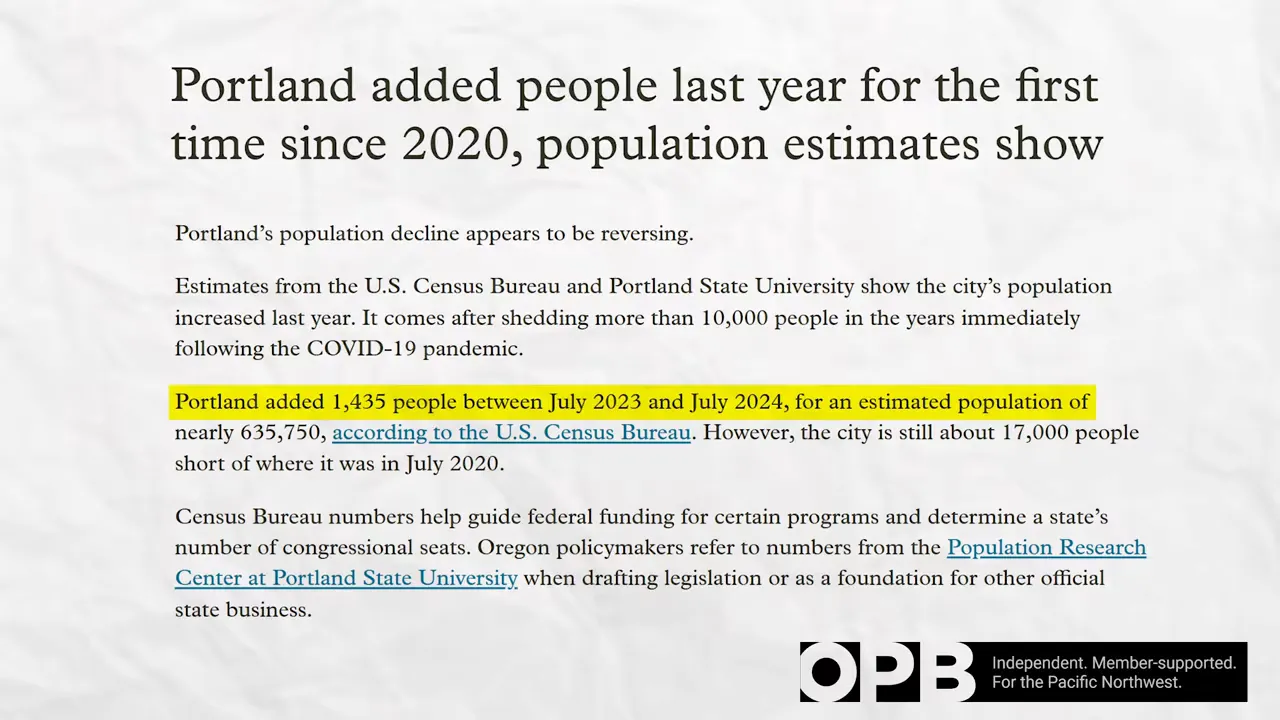
There was also a modest but important signal in the city itself. Portland posted its first population gain since the 2020 peak. That does not erase the tougher years, but it does suggest the story is no longer a straight downward line.
Reason 1: Taxes are a real factor
If we are being direct, taxes are one of the clearest reasons some people reconsidered moving to Portland or chose to leave.
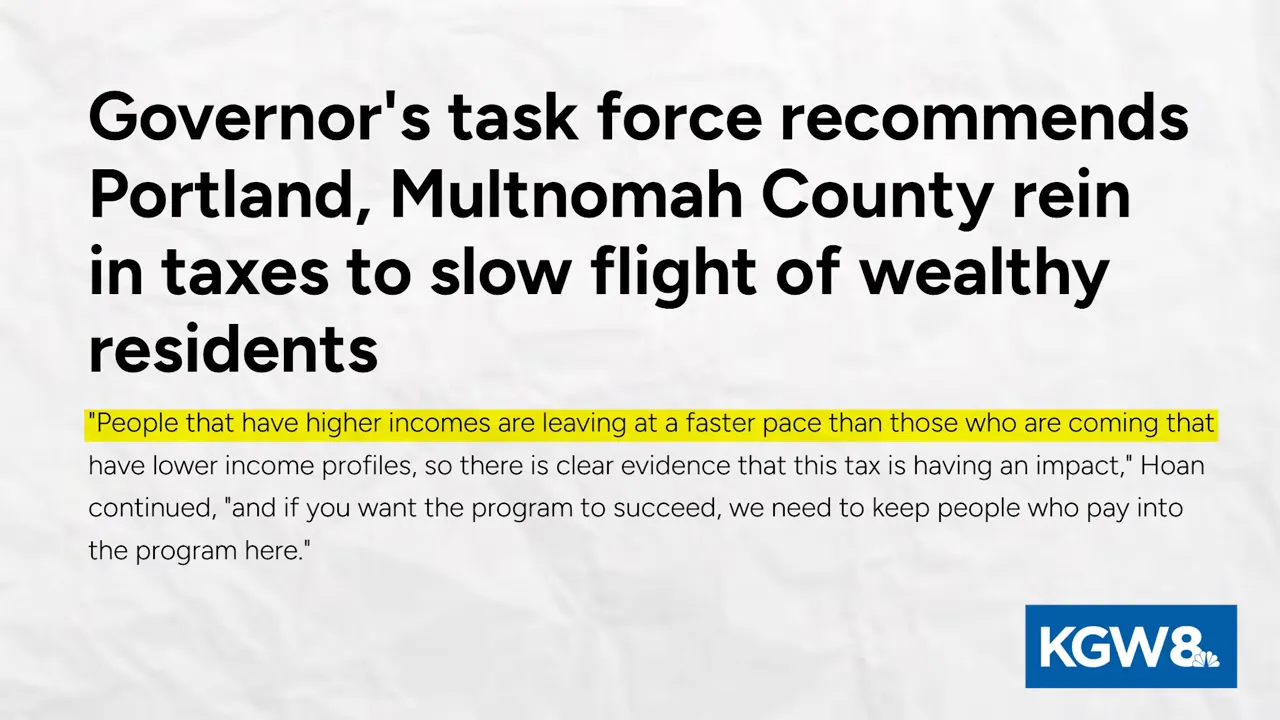
Between 2019 and 2023, local business taxes rose sharply. On top of that, Portland ended up with one of the highest combined top marginal income tax rates in the country, roughly 14.7%. Only New York City ranked higher in the comparison discussed.
What really catches people off guard is not just the headline rate. It is where those local taxes start to stack. In New York, those top brackets kick in at extremely high income levels. In Portland, some of the added local tax burden begins much earlier, around $125,000 for a single filer.
That is why higher earning households have paid close attention. It is also why migration data has shown some more affluent residents leaving Multnomah County.
Still, taxes do not hit every household the same way. For some buyers, they are a major deal breaker. For others, they are manageable in exchange for the lifestyle.
Who should pay very close attention to the tax question
- High income professionals
- Business owners
- Anyone earning well into the six figures
- Buyers planning to live specifically in tax heavier areas
Who may view the tax tradeoff differently
- Retirees living more from investments or equity
- Buyers arriving with substantial proceeds from a prior home sale
- Remote workers focused more on lifestyle and access to the outdoors
There is also an important counterweight here. Oregon property taxes work differently than many people expect. Under Measure 50, assessed values are generally limited to annual growth of about 3%. That creates more predictability for long term owners.
For buyers coming from places where property taxes can jump hard with market value, that stability is not nothing.
Another nuance is geography. Some taxes apply across the broader metro. Others are much more specific to Multnomah County or Portland itself. So if you are thinking about moving to Portland, where you land changes the math.
Reason 2: Remote work changed the relocation game
The second reason has less to do with Portland specifically and more to do with what happened nationwide.
During 2020 through 2022, Portland became a magnet for remote workers leaving more expensive metros. Buyers came from places like San Francisco and Chicago looking for more room, better access to outdoor recreation, and the chance to buy an actual house without paying coastal superstar prices.
Then the rules changed. Employers pulled people back toward the office. Hybrid schedules tightened. Some households that had built their entire relocation around location independence suddenly discovered they were not actually location independent after all.
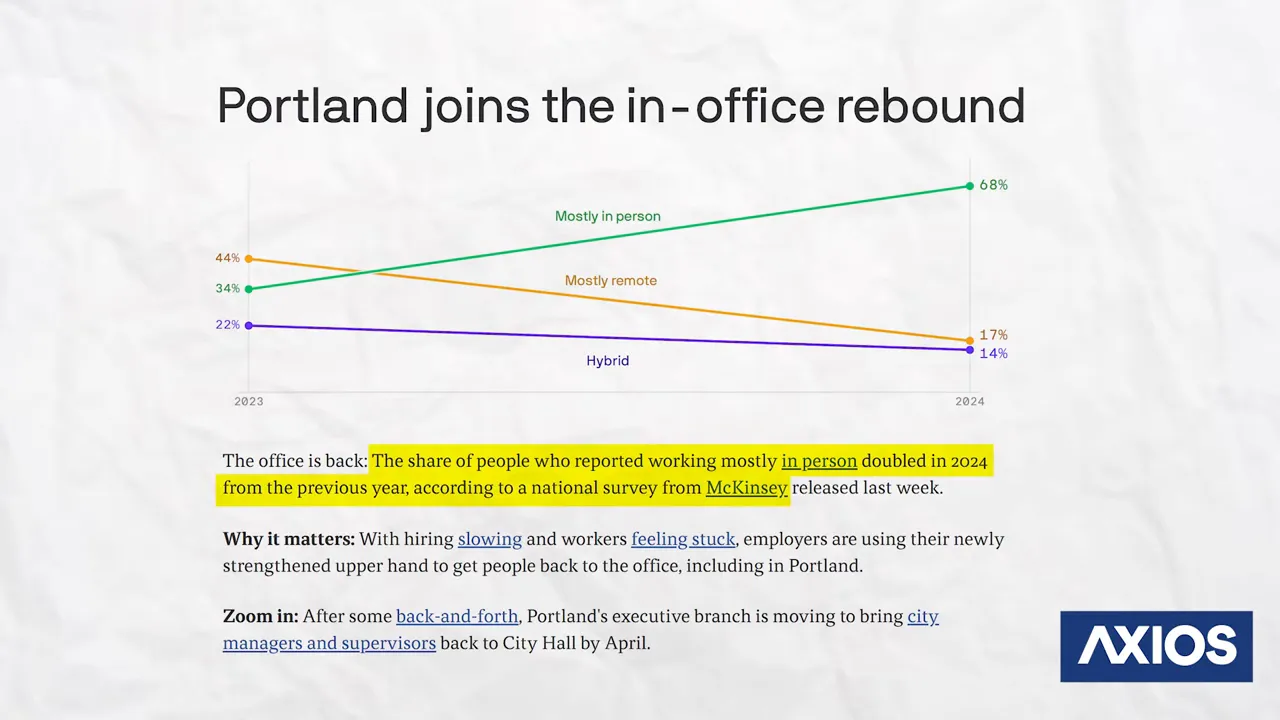
If your employer is based in San Francisco, Seattle, or New York and now expects regular in person attendance, living in Lake Oswego or Sherwood gets complicated fast. That is not really a Portland flaw. That is a commuting reality.
For that reason, this issue mainly affects:
- Out of state employees tied to offices in other metros
- Workers now required to commute weekly or multiple times per week
- Households whose move depended on a fully remote arrangement staying permanent
It affects other groups much less:
- Truly remote workers
- Retirees
- Buyers working for Portland area employers
- People in sectors where hybrid work remains common, including tech and healthcare
So if your plan for moving to Portland depends on your job staying flexible, verify that before you commit. This is one of those details that can make or break the move.
Reason 3: Major employer layoffs hit the region
The third factor is harder, because it involves real families and real jobs. In 2025, the Portland metro finished the year with roughly 8,800 fewer jobs than it started with.
Nike announced hundreds of Oregon layoffs. Intel cut thousands of Oregon positions across several rounds, including a major impact tied to Hillsboro campuses. Together, those two employers represented a large share of the region's job pain.
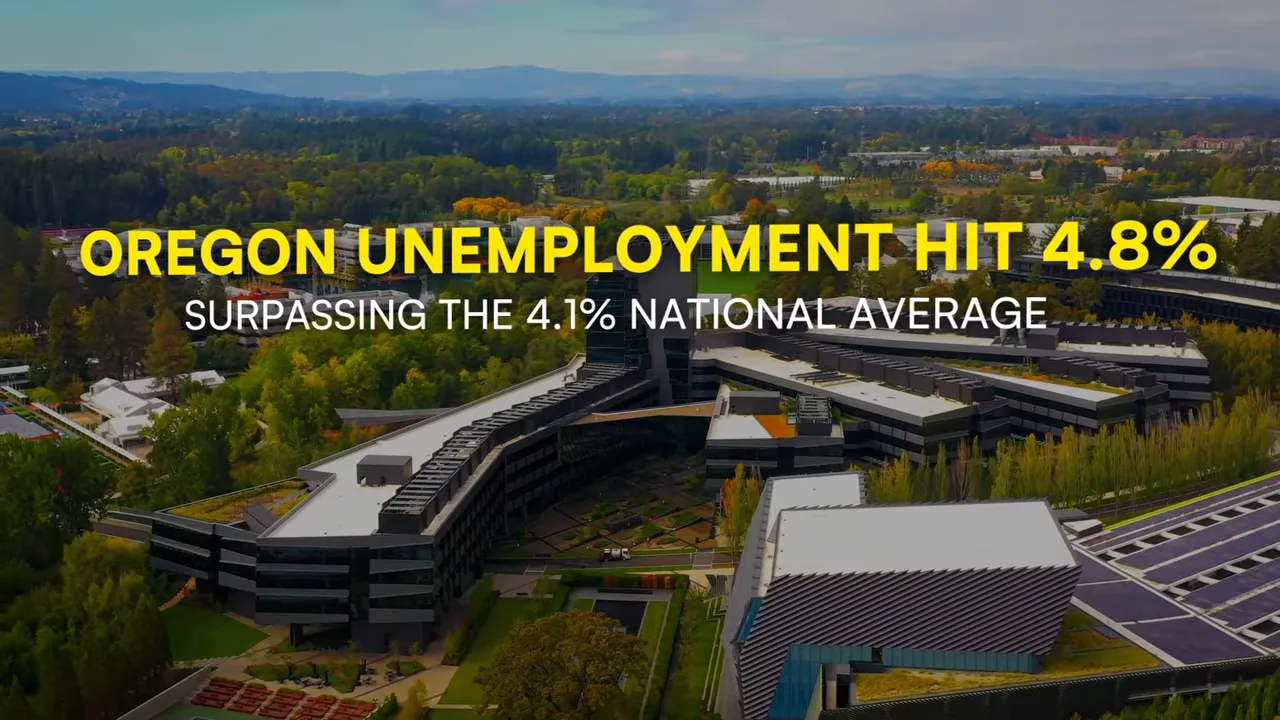
Oregon unemployment also moved above the national average, rising to around 4.8% versus roughly 4.1% nationally.
If your move was tied directly to one of those companies, that was not a small footnote. It was central.
Who this job story affected most
- Intel employees
- Nike employees
- Buyers relocating specifically for those local corporate roles
- Households whose financial plan depended on continued employment there
That said, there were encouraging signs too. Economists tracking the region argued that the layoffs were more connected to company specific restructuring than to Portland itself. Healthcare kept adding jobs. Federal semiconductor support was expected to keep backing domestic investment. Oregon lawmakers also committed about $200 million to strengthen the industry locally.
That does not mean the pain was fake. It means we should be careful about drawing the wrong conclusion from it. A rough year for a few giant employers is not the same thing as saying the whole region is no longer viable.
Who is still moving to Portland
Here is the part many people miss when they focus only on out migration. Oregon also saw a rebound in inbound movement, and not just by accident or by default. People were still choosing this state after comparing it against other options.
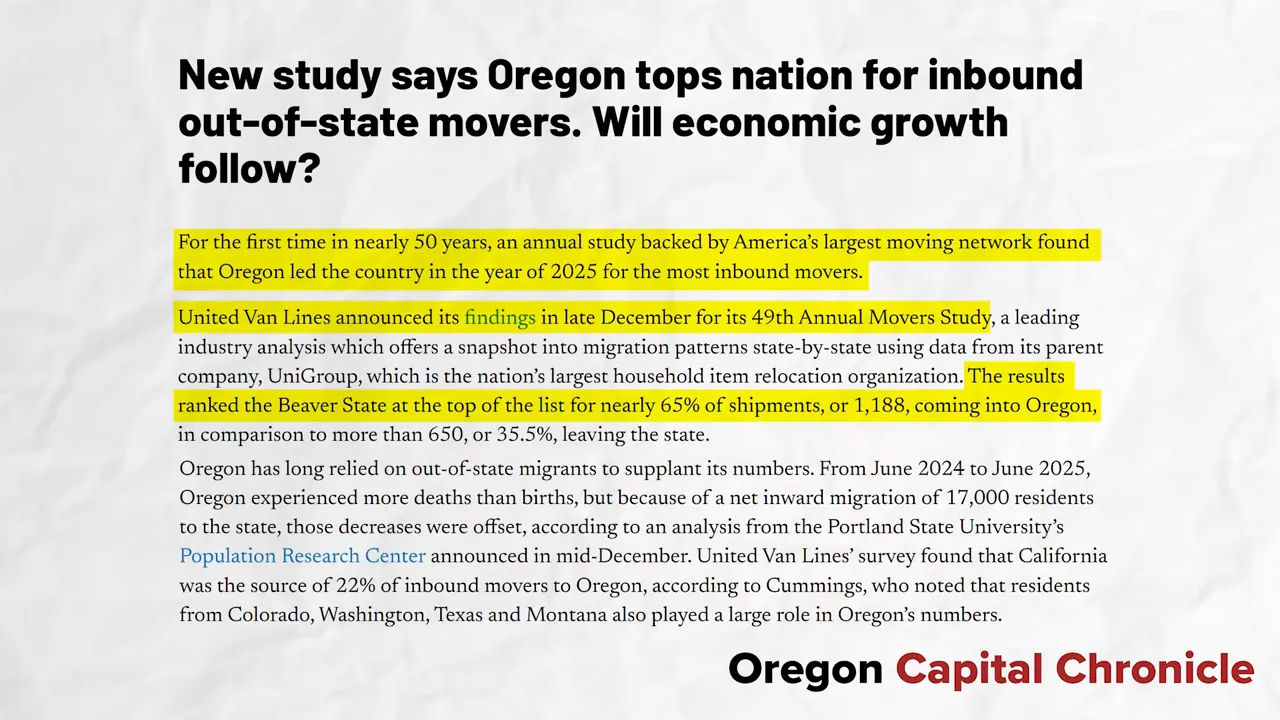
A meaningful share of incoming households reported six figure incomes, and California remained one of the biggest feeder markets. These are not random moves. These are researched moves.
That is especially true on the west side. Washington County continued to add residents and outperformed broader growth trends. Places like Beaverton, Tigard, and Sherwood stayed active. Higher end markets like Lake Oswego and West Linn also kept seeing strong buyer demand.
That is why the conversation around moving to Portland really should be reframed as a conversation about which part of Portland metro fits you. For many buyers, the westside suburbs are the actual target, not downtown Portland.
What is keeping home prices supported
One reason the housing market has held up better than some outsiders expect is the rate lock in effect.
A huge share of owners bought or refinanced when mortgage rates were around 3% to 4%. At the same time, Oregon home values climbed substantially over the past five years, leaving many owners with significant equity.
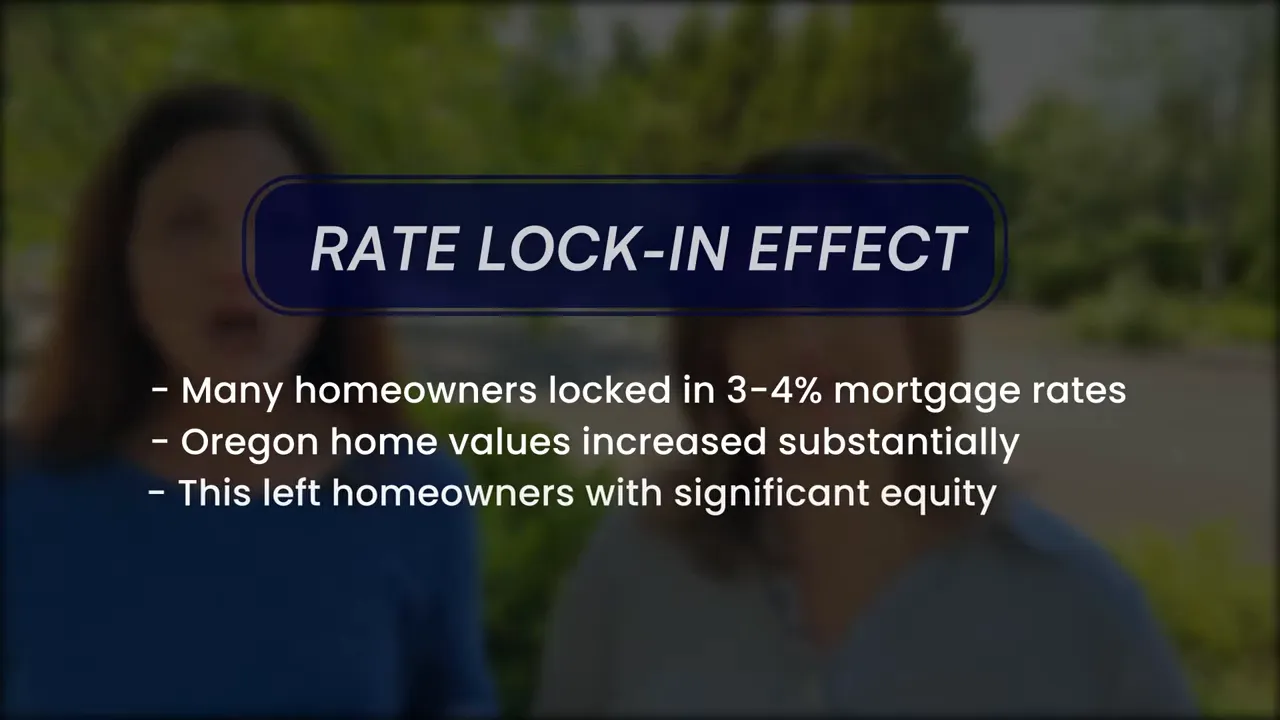
Those two facts create a powerful inventory constraint. People do not want to give up low rates. They also do not have to sell unless they really need to. Fewer listings tend to support prices, especially in neighborhoods where people already badly want detached homes.
That is one reason buyers who stopped trying to time every wiggle in the market and instead focused on location and long term fit have often done better than buyers waiting for the perfect moment.
When moving to Portland makes sense
So who is the strongest fit for moving to Portland in 2026?
1. Buyers bringing strong home equity
If you are selling in California, Texas, or Florida and arriving with meaningful equity, Portland can look compelling. The average sales price discussed was around $550,000, well below Seattle and far below San Francisco.
That price gap is a big reason moving to Portland still appeals to West Coast buyers who want lifestyle without going all the way up the pricing ladder.
2. Remote capable professionals choosing lifestyle
If your work setup is stable and flexible, Portland offers a lot. Wine country. Mount Hood. The Oregon Coast. Forest Park. More breathing room. A generally slower pace than bigger coastal hubs.
The core appeal is not just saving money. It is getting a Pacific Northwest lifestyle that can be difficult to match at similar price points elsewhere on the West Coast.
3. Buyers specifically hunting for detached homes
If your goal is a single family home in a desirable suburb, you need to understand both the opportunity and the challenge. These homes are still in demand, and supply remains limited in many pockets.
That scarcity can be frustrating, but it is also one reason values in stronger suburban submarkets have stayed supported.
When moving to Portland does not make sense
Here is the part that needs to be said clearly. Moving to Portland is not right for everyone.
The average price point around $550,000 can be misleading if that number is already the absolute edge of your budget. The homes many buyers actually want, especially move in ready three or four bedroom homes with yards in desirable suburban pockets, often cost meaningfully more than the metro average.

If you are relocating from a much lower cost market and have not fully adjusted to what suburban Portland pricing really looks like, this move may feel harder than expected.
That does not mean Portland is overpriced in a West Coast context. It means there is a difference between a headline average and the real cost of the most sought after inventory.
So if your budget is tight, your job situation is uncertain, or you need the taxes to work perfectly in your favor, hit pause and run the numbers carefully before moving to Portland.
Our honest verdict
The case for moving to Portland in 2026 is not universal, but it is genuinely strong for the right buyer.
If you are equity rich, lifestyle driven, remote capable, or targeting the westside suburbs with realistic expectations, there is still a lot to like here. The broader metro continues to attract people for a reason. The combination of nature, relative West Coast value, and suburban housing options is still hard to replicate.
If, on the other hand, you are highly sensitive to local taxes, dependent on an employer outside the region that is pulling staff back in person, or shopping at the absolute bottom edge of your budget, you need to go in with your eyes wide open.
That is really the truth. Some people left for valid reasons. Some people are still coming for equally valid reasons. The difference comes down to fit.
If you’re considering a move and want help determining which part of the Portland metro truly fits your budget, work situation, and goals, we’re here for you. Call or text 503-804-1466 to start the conversation today.
Prefer to think it through first? Reach out and we’ll share clear next steps based on your timeline and target neighborhoods.
FAQ: Moving to Portland
Is moving to Portland in 2026 a good idea?
It can be a very good idea if your finances, work setup, and lifestyle priorities match the market. Moving to Portland makes the most sense for buyers with equity, stable remote or local employment, and a strong interest in the Pacific Northwest lifestyle.
Why did people leave Portland?
The biggest reasons discussed were local tax burden, the shrinking flexibility of remote work, and layoffs from major employers such as Intel and Nike. Those issues affected some groups much more than others.
Are people still moving to Portland?
Yes. Oregon saw stronger inbound migration again, and many buyers are still choosing the Portland metro, especially westside suburbs like Beaverton, Tigard, Sherwood, Lake Oswego, and West Linn.
Is Portland affordable compared with Seattle and San Francisco?
Compared with those markets, yes. Portland remains far more attainable on a West Coast basis. But desirable suburban single family homes often cost more than the metro average, so buyers should not assume the headline median reflects the exact homes they want.
What part of the metro is strongest for relocation buyers?
The westside suburbs stand out in this conversation. Washington County and nearby higher demand suburban markets have shown stronger growth and buyer activity than the out migration headlines alone would suggest.