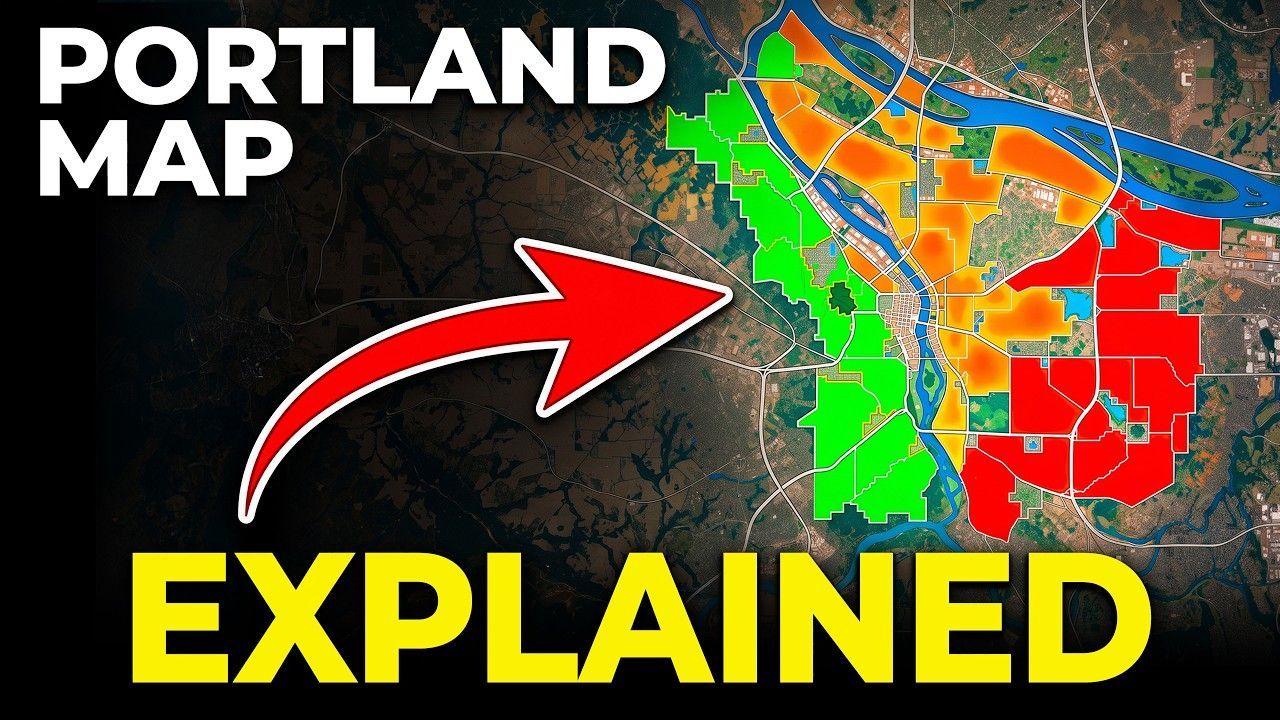
The Portland housing market is not just going through another normal cycle. That is the big idea we need to get clear on first. Prices are not the whole story. Interest rates are not the whole story. What is really changing is the growth pattern that shaped the metro for decades, especially on the Westside.
For a long time, Portland had a pretty reliable formula. Growth moved outward. Developers found cheaper land, extended roads and utilities, built large suburban communities, and counted on a growing buyer base to absorb the inventory. That model built a huge amount of what we now think of as classic suburban Portland.
But the Portland housing market is now running into hard constraints. Land is more expensive. Infrastructure is far more costly. Migration trends are softer. And the kinds of homes that can still be built profitably are often not the same homes many buyers actually want.
That matters because once we understand this shift, we stop asking the wrong question. The question is not simply whether the Portland housing market will go up or down. The real question is which neighborhoods are positioned on the right side of this new model.
Table of Contents
- How The Portland Housing Market Used To Grow
- Why The Old Model Is Breaking
- What Developers Are Facing Now
- What The Portland Housing Market Looks Like Right Now
- Which Areas Look More Vulnerable
- Which Areas Look Positioned To Win
- What Sellers Should Do
- What Buyers Should Do
- FAQ: Portland Housing Market
How the Portland housing market used to grow
For roughly 40 years, the Portland housing market leaned heavily on suburban expansion, especially westward along major corridors like Highway 26 and 217. The process was straightforward.
- Developers bought larger pieces of relatively affordable land.
- Utilities, roads, and transportation systems were extended outward.
- Master planned neighborhoods were built at scale.
- Growing demand, including relocations from outside Oregon, helped fill those homes.
That system did not just create more housing. It created a particular kind of housing. Larger homes. Bigger lots. Single family neighborhoods. Car dependent communities. Expansion at the metro edge.
That old formula worked because land costs were manageable and demand kept growing. Everyone could plan around it. Developers could. Cities could. Buyers could. Investors could.
Now, that formula is losing steam, and the Portland housing market is starting to reward a very different set of conditions.
Why the old model is breaking
There are three structural forces colliding at once, and together they are changing how the Portland housing market functions.
1. Infrastructure is getting too expensive
This is probably the least glamorous part of real estate, but it may be the most important. New growth is not just about land. It is about roads, traffic systems, utilities, and the cost of supporting all of that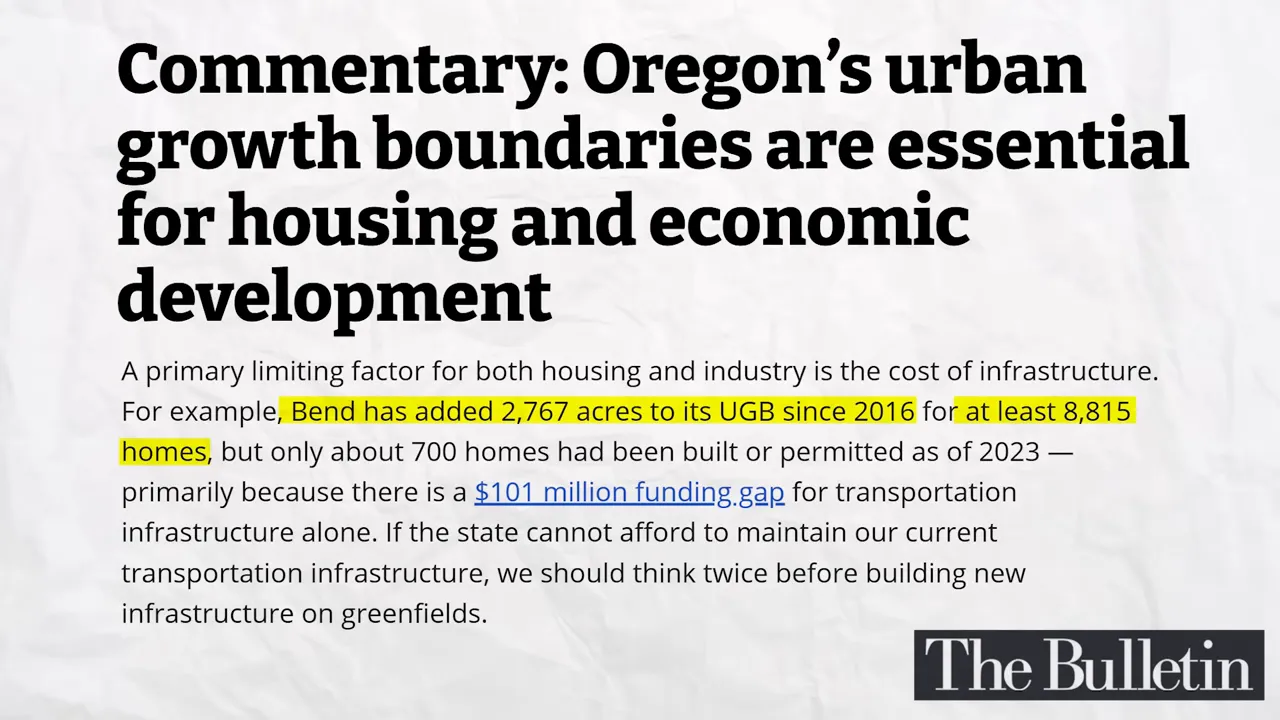
An example from Bend helps make the point. Thousands of acres were added inside the urban growth boundary, enough for thousands of homes, but only a small fraction were actually built because transportation funding was short by more than $100 million. The land existed. The infrastructure money did not.
Portland faces a similar issue. Builders pay transportation related development charges, and those fees have become a major part of whether a project works financially.
In other words, it is no longer enough to say, "There is land out there." The more relevant question in the Portland housing market is whether the infrastructure can be funded and delivered without blowing up the economics of the project.
2. Migration is not what it used to be
Portland used to be one of those places that consistently landed high on relocation lists. That inflow helped feed suburban development. But that tailwind is weaker now.
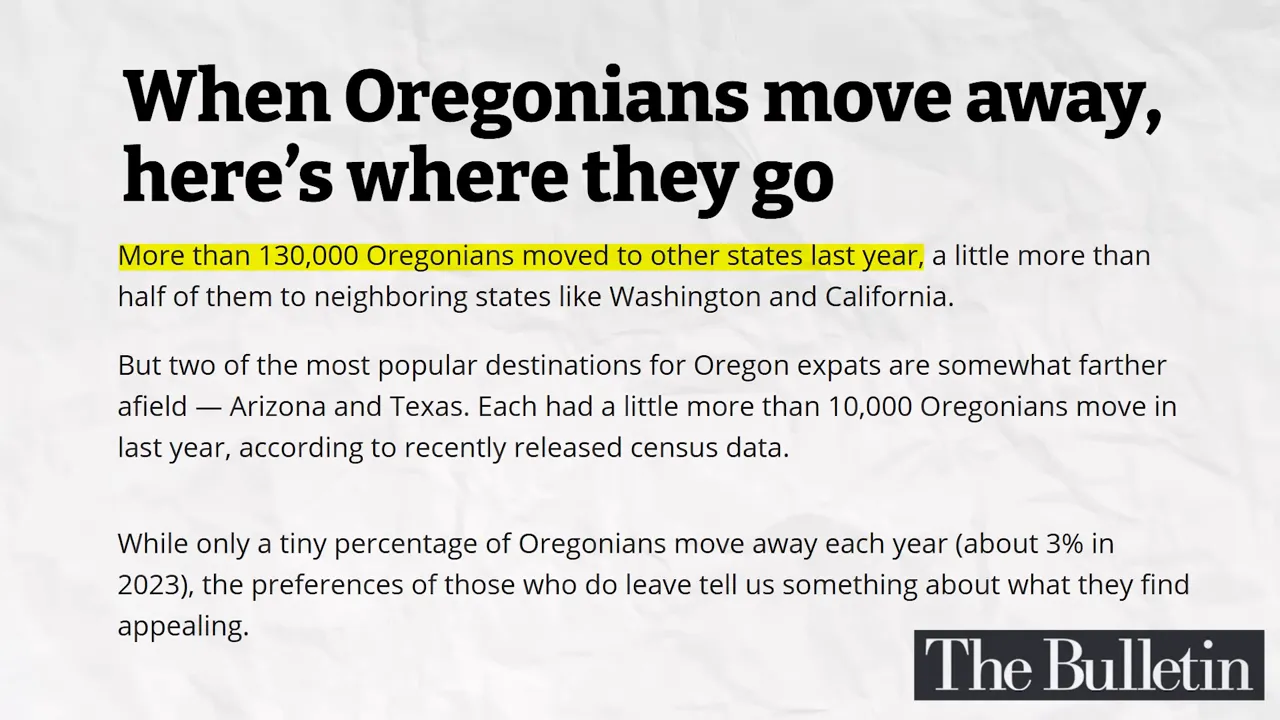
State level data showed a large number of Oregonians leaving in a single year, and Multnomah County has been near the bottom among major counties for population growth percentage. That does not mean nobody is moving here. It means the automatic assumption of endless buyer growth is no longer safe.
And when demand growth softens, developers notice. They become more selective. Lenders become more cautious. Projects that once felt obvious start looking risky.
3. Land is expensive and the buyer pool is tighter
The final pressure point is simple. Land that used to be comparatively affordable now carries a premium, while the buyer pool is not expanding the same way it once did.
That combination is brutal. Higher costs on one side. More limited absorption on the other. That is not a short term mood swing. It is a structural issue in the Portland housing market.
What developers are facing now
Here is what the math looks like for many new projects. Premium land prices. Permit costs that can run roughly $40,000 to $70,000 for a house. Holding costs for a year to a year and a half before the first home is even sold. And after all of that, the builder still needs a profit margin.
So what happens?
- The builder walks away because the project no longer works.
- The builder pivots to higher density products to spread the costs across more units.
That helps explain why we are seeing more attached homes, cottage style projects, and smaller lot development in the Portland housing market. The market is producing what can be built profitably, not always what buyers would choose if price and supply were easier.
That is the heart of the shift. Value starts moving toward existing homes in places where the infrastructure is already there, because the new supply pipeline is either constrained or producing a different product mix.
What the Portland housing market looks like right now
The interesting thing is that headline numbers in the Portland housing market can make everything look calm. And in many ways, it is calm.
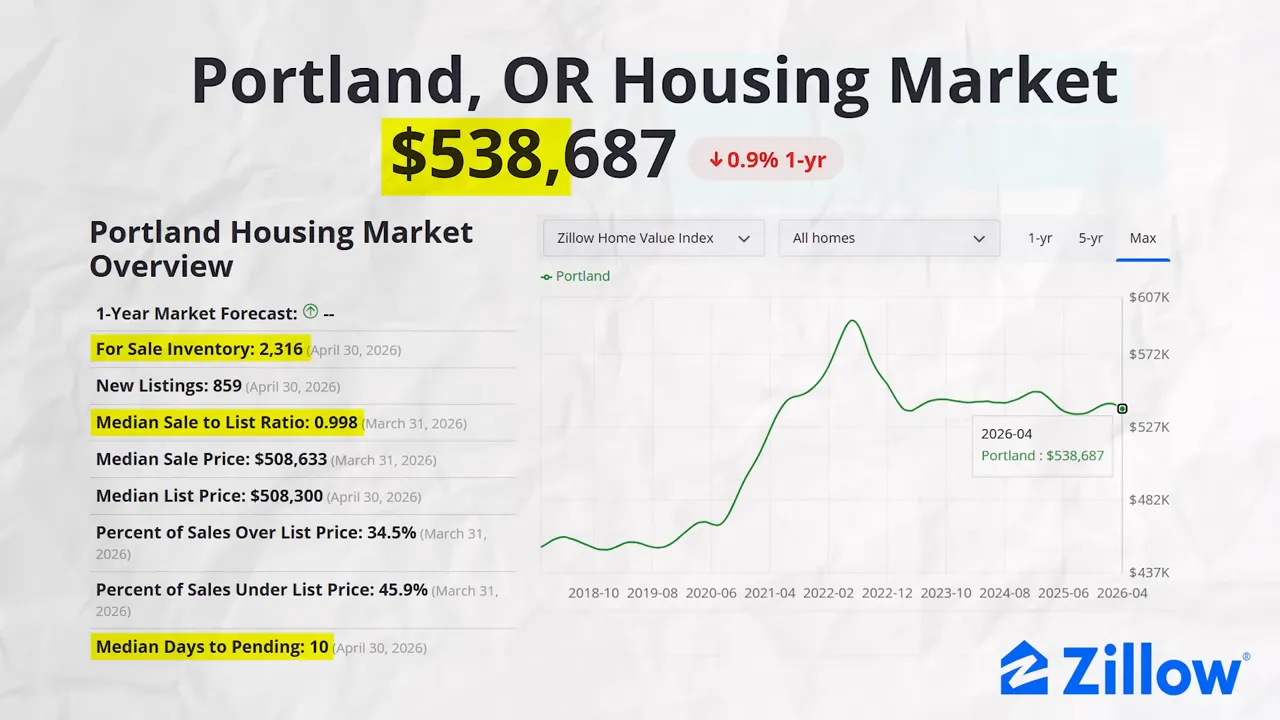
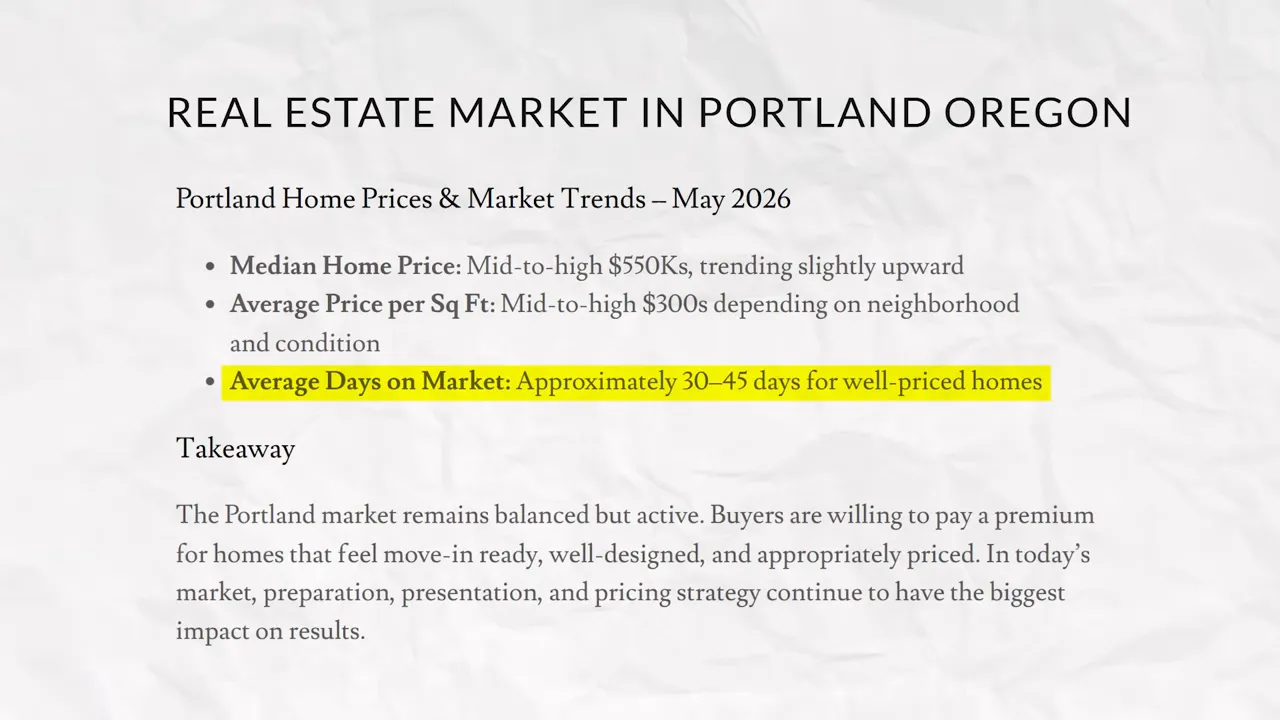
Inventory is up. Homes are selling. Buyers are making offers. Days on market have come down from the slower stretch. Median prices across the metro are basically flat, sitting in the mid $500,000s depending on the source and month used.
That does not look like a crash. It looks more like a stable market that has found a more balanced footing.
But stable headline pricing can hide what is happening beneath the surface.
The spread is widening between neighborhoods with existing infrastructure and neighborhoods that still depend on future promises. That is where the Portland housing market gets more nuanced. Two areas can both sit in the same metro and still move very differently over the next couple of years.
Which areas look more vulnerable
It is more useful to think in terms of conditions than labels. Rather than naming a neighborhood and calling it a loser, we should ask whether it has the traits that make it more exposed in this new environment.
Dependence on outward expansion
If a property depends on roads, utilities, phases, or public investment that still have not been completed, that is a risk. In the current Portland housing market, promised future growth is not as valuable as built infrastructure.
Single employer dependency
If an area relies too heavily on one employer or one industry, it becomes more vulnerable to even modest shifts. Employer diversity matters more than many people realize.
Condos under pressure
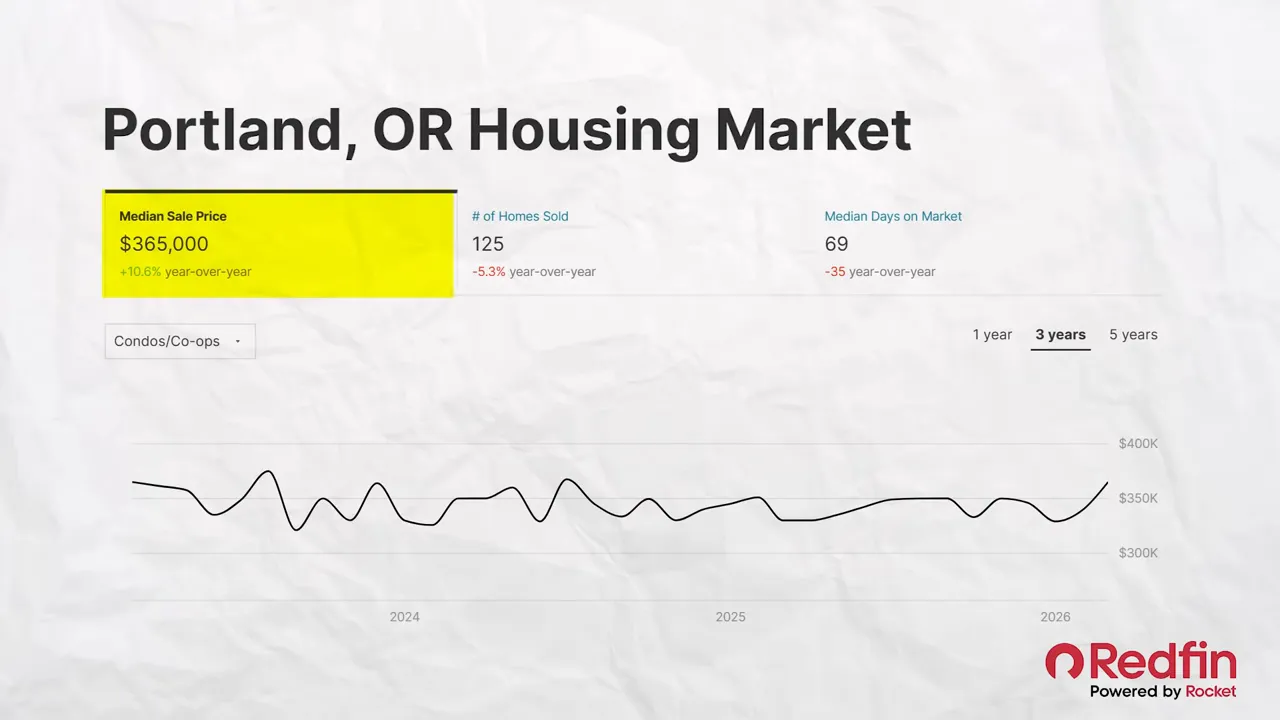
The condo segment has been showing weakness, with many units priced in the mid $300,000s to $400,000 range and some selling at substantial discounts from asking price. That tells us not all parts of the Portland housing market are carrying equal pricing power.
Luxury oversupply without supporting infrastructure
Some high end pockets can feel fragile if the surrounding infrastructure does not justify premium values over the long run.
Low density sprawl
There is also the municipal cost side. Research cited here points out that low density sprawl can cost more to maintain than it generates in taxes. That is not the kind of setup that supports long term strength.
When we evaluate a property in the Portland housing market, these are the questions worth asking:
- Is the infrastructure already built?
- Does the community have diverse employers?
- Is the inventory distinctive enough to stand out?
Which areas look positioned to win
The neighborhoods likely to hold up best in the Portland housing market share two big characteristics. They either already have infrastructure in place, or geography itself limits future supply.
Lake Oswego
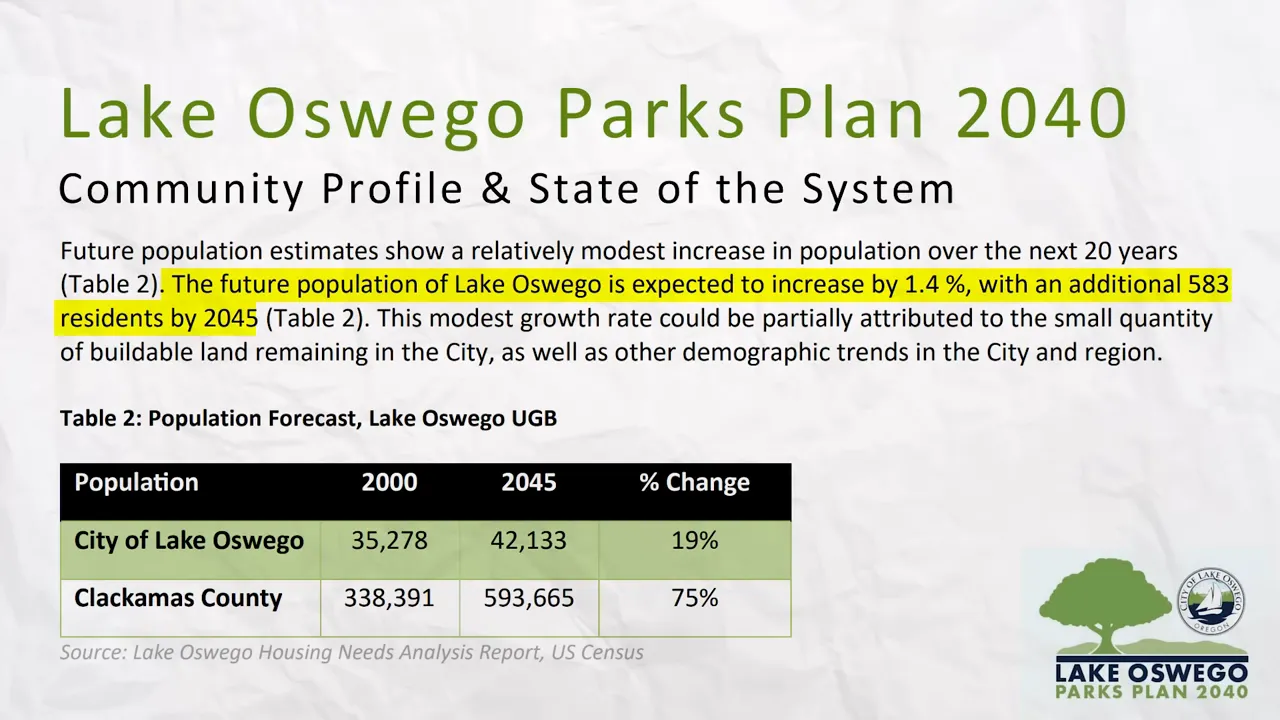
Lake Oswego stands out because it is constrained. There is only so much land left to build on, and that matters a lot.
Projected housing growth there is modest over the next couple of decades, and that limited supply is part of the reason the area can be more resilient when the broader Portland housing market softens.
West Linn
West Linn fits a similar pattern. It is boxed in by rivers, topography, and nearby jurisdictions. Outward expansion is limited, which supports the value of existing housing stock.
Tigard
Tigard is especially interesting because it gets some of the upside of growth without depending as heavily on unbuilt infrastructure. New construction is happening, but much of it is layered on top of systems that already exist.
That balance matters. In the Portland housing market, growth works better when roads, utilities, and services are already in place.
Sherwood
Sherwood also looks strong because it has a real sense of self containment. Amenities are local, schools are a draw, and demand has been healthy.
Beaverton, but only selectively
Beaverton is mixed, and that is important. Some pocket areas are very well positioned, especially older established parts near transit, major employers, and long standing infrastructure. Other areas are more exposed to the same risks we have been talking about.
That is why broad city level opinions can be misleading in the Portland housing market. A great pocket and a vulnerable pocket can exist inside the same city limits.
What sellers should do
The Portland housing market is more balanced than it was during the frenzy years. That means good homes still sell well, but sloppy strategy gets punished much faster.
If a listing is priced right, presented well, and move in ready, it can still move quickly. But homes that are overpriced, poorly prepared, or badly marketed tend to sit.
The biggest advice for sellers right now is simple: price correctly from day one.
- Do not test the market with an aspirational price.
- Do not anchor to what a neighbor got during a hotter period.
- Do not assume emotion will override buyer caution.
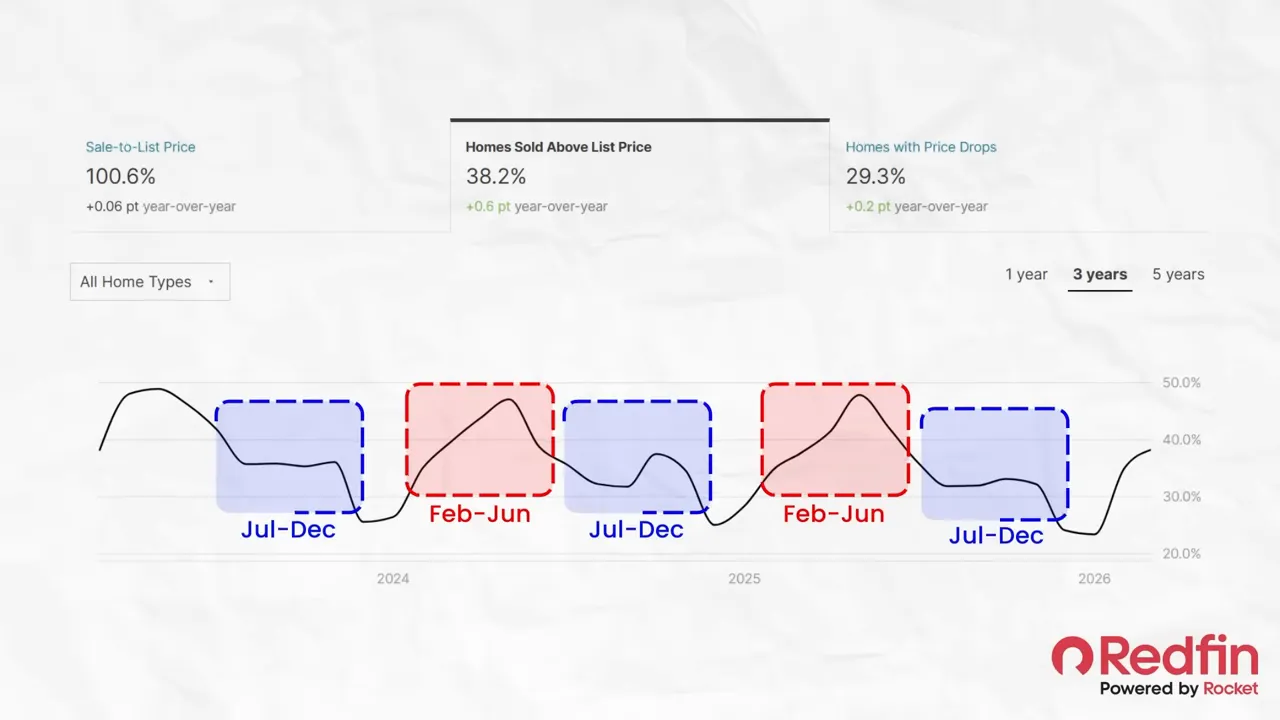
Seasonality still matters too. In general, spring tends to be the best window in the Portland housing market, often running from February through June. That is when buyer demand is usually strongest. The second half of the year can lean more in the buyer's favor, even though homes still sell.
What buyers should do
For buyers, the current Portland housing market is actually a pretty workable environment. There are fewer bidding wars than in the peak chaos years, more room to negotiate on many properties, and more opportunity for prepared buyers to win with smart offers.
Average days on market are roughly in the mid 30s, which is not lightning fast. It means we need to be strategic, not reckless.
There are three smart shifts buyers should make.
1. Read the listing before you read the market
A softer overall market does not mean every good listing will wait around. If a home is move in ready, priced properly, and located in one of the stronger pockets, we still need to move with purpose.
2. Buy where infrastructure already exists
This is the big filter for the Portland housing market right now. We want the roads, utilities, transit, and access to already be there. We do not want to pay today's price for tomorrow's maybe.
3. Get hyper specific about neighborhoods
The Portland housing market is now much more neighborhood specific than many people think. Especially in larger places like Beaverton, pocket level analysis matters. Commute. Transit. Employer access. Existing services. Housing mix. All of that matters more than the city name alone.
That leads to the clearest mental model of all: every property is increasingly living on one side of the line or the other. Either it belongs to the new model, supported by existing infrastructure and established demand, or it belongs to the old model, still depending on expansion and unfinished systems.
And that is why the Portland housing market feels different now. The shift is already underway whether we participate or not.
Thinking of buying or selling in Portland?
If you want a clear, neighborhood-level plan (based on the “new model vs. old model” shift), reach out to us for a strategy call.
- Buyers: Get help filtering for homes where the infrastructure already exists and you’re not paying for “maybe.”
- Sellers: Learn how to price correctly from day one and position your home to sell in a more balanced market.
Book a Buyer/Seller Consultation (Zoom) or Request a Free Equity Review
FAQ: Portland Housing Market
Is the Portland housing market crashing?
No. The picture described here is much closer to a stable, rebalanced market than a crash. Prices are relatively flat, inventory has improved, and homes are still selling. The bigger story is that different neighborhoods are likely to perform differently depending on infrastructure and supply constraints.
What is the biggest change in the Portland housing market?
The biggest change is the end of the old outward expansion formula as the main growth engine. Rising infrastructure costs, softer migration trends, and more expensive land are shifting value toward established neighborhoods with existing infrastructure.
Which types of areas look stronger in the Portland housing market?
Areas with infrastructure already in place and limited future supply look better positioned. Examples discussed include Lake Oswego, West Linn, Tigard, Sherwood, and selected pocket areas in Beaverton.
What should buyers focus on right now?
Buyers should focus on neighborhoods where the infrastructure is already built, not areas relying on future phases or future public investment. They should also evaluate each listing individually, because strong homes can still move quickly even in a calmer market.
What should sellers do in the current Portland housing market?
Sellers should price accurately from the start, prepare the home well, and market it professionally. The market is balanced, so presentation and pricing discipline matter more than they did during the frenzy years.
The main takeaway is simple. The Portland housing market is no longer best understood as one big metro moving in lockstep. It is becoming more selective. More local. More infrastructure driven.
That means better opportunities for people who can read the map correctly. And bigger mistakes for those still making decisions based on the old formula.
Read More: Portland Neighborhoods to Avoid: 5 West Side Suburbs Out-of-State Buyers Should Think Twice About