When we talk about the pros and cons of living in Portland, we need to be honest: this city is not for everybody. Portland has things that surprise people after they arrive. Some of those surprises are exactly why people never want to leave. Others are the reasons people wish somebody had been more direct before they packed up their lives and moved here.
The real question is not whether Portland is good or bad. It is whether the tradeoffs fit your income, daily routine, weather tolerance, housing priorities, and definition of a great lifestyle. Portland can be an incredible place to plant your flag, but it works best when we go in with our eyes wide open.
Here are the six biggest pros and cons of living in Portland in 2026, from the tax math and gray season to homes, traffic, outdoor access, downtown, and the communities where daily life is happening now.
Table of Contents
- The Big Picture on Living in Portland
- Con 1: Oregon's Income Tax Is a Real Cost
- Pro 1: Zero Sales Tax Makes Everyday Spending Easier
- Con 2: The Gray Season Can Be a Real Adjustment
- Pro 2: The Pacific Northwest Lifestyle Is World Class
- Con 3: Traffic Is Worse Than Many Newcomers Expect
- Pro 3: Home Equity Can Go Further in Portland's Westside Suburbs
- Con 4: One-Level Homes Are Harder to Find Than Expected
- Pro 4: The Everyday Cost of Living Can Be More Manageable
- Con 5: Most Retirement Income Is Taxable in Oregon
- Pro 5: Portland Summers Are an Underrated Payoff
- Con 6: Downtown Is Not the Primary Weekend Destination It Once Was
- Pro 6: Neighborhoods and Suburbs Are Where Daily Life Happens
- The Bottom Line on Portland
- Frequently Asked Questions
The Big Picture on Living in Portland
There is a number most people do not look at before moving here: 222 cloudy days per year. That sounds like a deal breaker until we also look at the other side of Portland weather. August averages only three rainy days and about 0.4 inches of rain.
That contrast tells us a lot about Portland. We get a real gray season, but we also get a long, dry, low humidity summer that people from hotter states often find absolutely life changing. The same is true financially. Oregon has zero sales tax, but it is not a low-tax state once income taxes enter the picture.
The pros and cons of living in Portland are rarely one-size-fits-all. Retired households, remote workers, daily commuters, high earners, families, and people planning to age in place can all experience this metro very differently.
Con 1: Oregon's Income Tax Is a Real Cost
The first of the pros and cons of living in Portland is the one that catches many relocating households off guard: Oregon income tax. State income-tax rates run from 4.75% up to 9.9%. The top marginal rate begins at $125,000 for single filers and $250,000 for couples filing jointly.
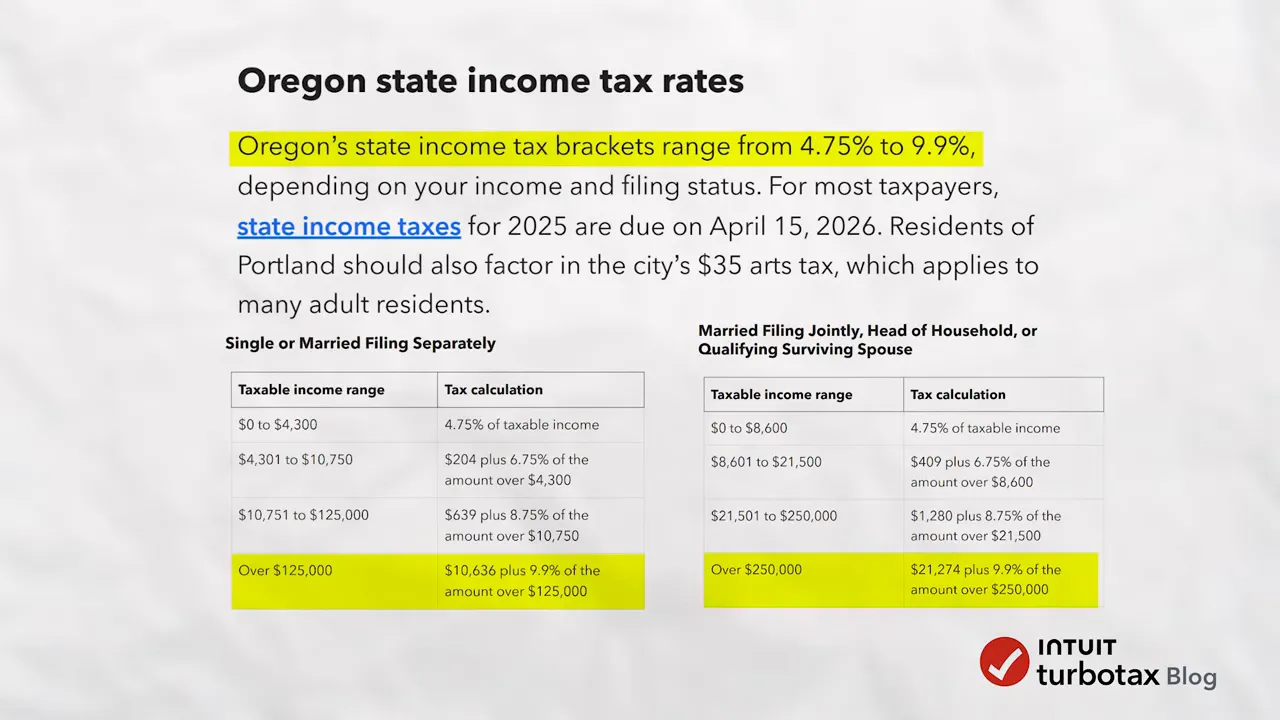
It is easy to hear “no sales tax” and assume Oregon is a low-tax state. It is not that simple. For households coming from places such as Texas, or for those earning California-level salaries, the state income tax can become a meaningful part of the monthly and annual budget.
Here is the tradeoff in practical terms. Buying a $60,000 car in Oregon may save roughly $5,000 to $6,000 compared with buying where sales tax is charged. But a household with income above $250,000 will pay the 9.9% marginal Oregon rate on dollars above that threshold. Both things can be true at the same time.
When considering the pros and cons of living in Portland, we need to run the math for our individual situation, not rely on a headline. Income, retirement distributions, planned purchases, and home budget all matter.
Pro 1: Zero Sales Tax Makes Everyday Spending Easier
Oregon has no state sales tax and no local sales tax. Not one cent. The sticker price is the price we pay, whether we are buying a refrigerator, furniture, fixtures, clothing, or a vehicle.
This becomes especially meaningful after a move. Furnishing a home means buying appliances, furniture, lighting, household basics, and all the small things that add up fast. A $1,200 refrigerator costs $1,200. There is no surprise tax added at checkout.
Unlike a one-time moving incentive, this benefit continues with every purchase we make for as long as we live here. For many people weighing the pros and cons of living in Portland, this is one of the daily advantages they do not want to give back after experiencing it.
Con 2: The Gray Season Can Be a Real Adjustment
Portland averages 222 cloudy days annually and ranks among the cloudiest cities in the country. The hard part is not necessarily constant, heavy rain. It is the long stretch of low clouds, overcast skies, and flat gray light that can run from October into May.
December is typically the toughest month, with about seven inches of rain. Portland rain is often drizzle rather than the kind of downpour that stops everything. But the gray can still wear on us over time, especially when the sun disappears for days in a row.
This is one of the most personal pros and cons of living in Portland. If seasonal depression affects us, or if sunshine is essential to feeling like ourselves, we need a real plan before relocating. That may mean making regular winter trips, building an active indoor routine, or spending meaningful time here during the gray season before making a permanent decision.
Portland weather is not something to dismiss with “it only rains a little.” The rain is manageable. The accumulated gray is what deserves respect.
Pro 2: The Pacific Northwest Lifestyle Is World Class
What do we get in exchange for the gray season? Exceptional access to the Pacific Northwest. Within about 45 minutes of many Portland suburbs, there are enough weekend options to keep us busy for months.
We can bike, hike, explore parks, kayak, head to wine country, or drive into the Gorge and still make it back for dinner. From Sherwood, for example, a full day in wine country is completely realistic. Wine flights commonly run around $25 to $50.

Many people move for family, a different cost of living, or relief from hotter climates. Then they realize outdoor access is one of the strongest parts of the pros and cons of living in Portland. It is not an occasional vacation lifestyle. It can be a normal Saturday.
Con 3: Traffic Is Worse Than Many Newcomers Expect
Portland does not always feel like a major traffic city during a short visit. But for a daily commuter, it absolutely can be one. A 2025 Texas A&M report found that Portland commuters lost an average of 72 hours to congestion in the prior year, up 6% from 2023.
The west side deserves special attention. I-5, Highway 217, and U.S. 26 converge in ways that create serious bottlenecks during peak travel periods. A route that looks short on a map can take an extra 20 to 30 minutes.
Congestion no longer stays neatly inside the old 7:00 to 9:00 a.m. and 4:00 to 6:00 p.m. windows. Hybrid work schedules and visitor traffic have spread it more broadly throughout the day.
This item on the pros and cons of living in Portland comes with an important nuance. Retirees, semi-retired residents, and remote workers may barely notice the issue. If we are commuting into Portland five days a week, though, neighborhood selection is not a minor decision. It can shape our entire quality of life.
Pro 3: Home Equity Can Go Further in Portland's Westside Suburbs
For people moving with equity from the Bay Area, California, or other high-cost markets, Portland-area housing can create a genuine financial reset. In May 2026, the median sale price in Lake Oswego was just under $1 million, while West Linn sat around $880,000. Those are still significant prices, but they are very different from comparable communities in the Bay Area, where homes regularly reach $1.5 million to $2 million or more.
For someone who has owned in the Bay Area for 15 or 20 years, that equity can potentially buy a more desirable home, lower a mortgage payment dramatically, or eliminate the mortgage altogether. Some households arrive expecting a lateral move and discover they can actually upgrade their home and strengthen their financial picture.
Of course, the pros and cons of living in Portland depend on exactly where we land. Lake Oswego, West Linn, Beaverton, Sherwood, Tigard, Tualatin, and other areas all offer different housing, commute, and lifestyle equations.
Con 4: One-Level Homes Are Harder to Find Than Expected
One-level homes are a consistent surprise for relocation buyers, particularly on the west side. The issue is not whether single-level houses exist. They do. The issue is finding one in the location we want, at a price we can afford, with the layout that works for the way we actually want to live.
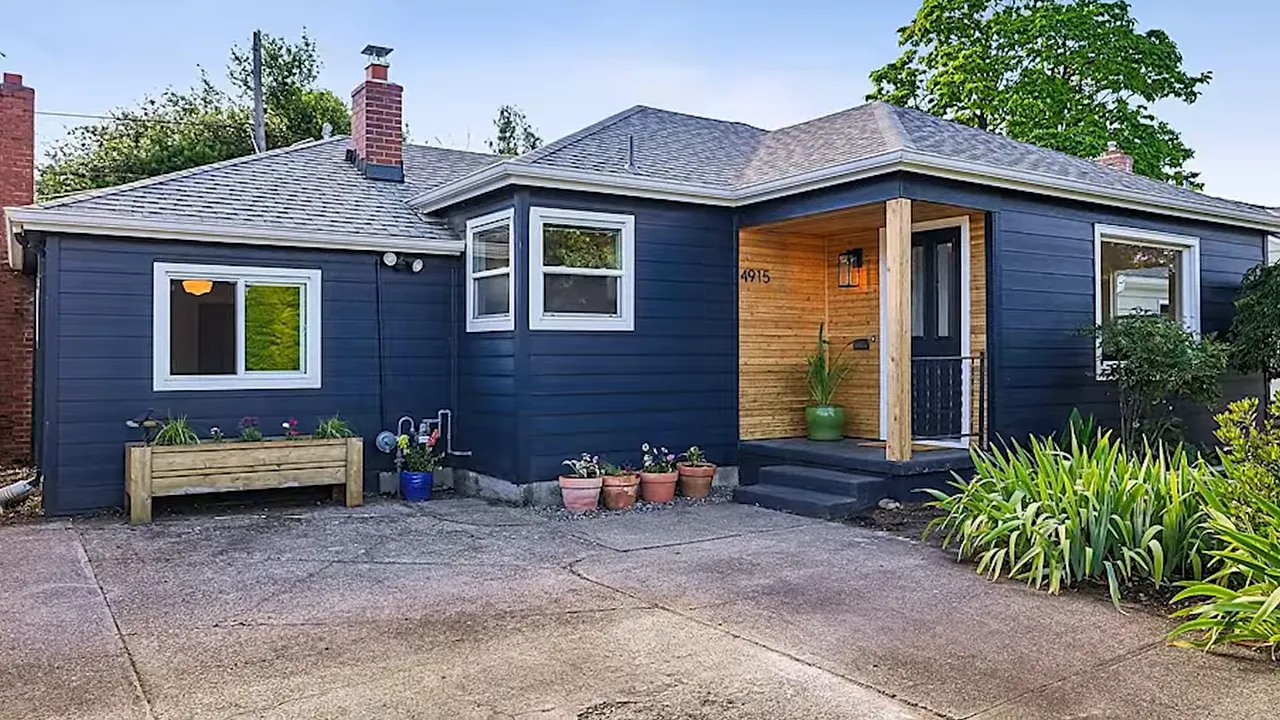
Demand is exceptionally high because many groups are competing for the same limited inventory:
- Out-of-state buyers seeking main-level living
- Local homeowners planning to avoid stairs long term
- Households with mobility considerations
- Buyers who want established, potentially walkable communities
Location is the whole game. The better question is not, “Can we find a one-level home on the west side?” It is whether we can find the right one-level home in the exact area, price range, and lifestyle setting that fit us. Among the pros and cons of living in Portland, this one matters enormously for long-term home planning.
Pro 4: The Everyday Cost of Living Can Be More Manageable
Portland is about 6% less expensive than San Jose, according to the cost-of-living comparison discussed here. The larger housing gap compared with San Francisco is even more significant. But the smaller recurring details are what can matter most over years.
Monthly utility costs in Portland are reported at 13% below the national average. Healthcare costs are generally lower than in major California markets, and zero sales tax continues to help with every purchase.
For households on a fixed income or planning around a specific monthly budget, these details are far more important than broad claims that a place is “affordable.” Portland also offers much of the Pacific Northwest lifestyle at a lower cost than Seattle, which has a higher cost of living in nearly every category and does not share Oregon's zero-sales-tax advantage.
That makes cost one of the more compelling pros and cons of living in Portland for people comparing Pacific Northwest options.
Con 5: Most Retirement Income Is Taxable in Oregon
Retirees need to look closely at Oregon taxes before moving. Social Security benefits are not taxed by Oregon, which is good news. But most other retirement income is generally taxable at the state level, including traditional pensions, 401(k) distributions, IRA withdrawals, and many annuity payments.
The state income tax rate can reach 9.9%, depending on taxable income. There is a retirement income credit for some taxpayers age 62 and older, but for the 2025 tax year household income needed to be under $22,500 for single filers or $45,000 for couples filing jointly.
This is not a reason every retiree should rule Portland out. It is a reason to consult a CPA and make a proper budget first. Retirement income taxation is a critical part of the pros and cons of living in Portland, especially for anyone relying primarily on distributions rather than Social Security.
Pro 5: Portland Summers Are an Underrated Payoff
Portland summers are truly one of the great rewards of living here. August receives only around 0.4 inches of rain over about three rainy days. Roughly from June through September, and sometimes into early October, the weather becomes clear, dry, comfortable, and remarkably low in humidity.

This is where the weather story flips. The green hills are out, winery patios are open, Mount Hood is visible in the distance, farmers markets are in full swing, and an evening on the back patio can easily stretch to 9:00 p.m.
For anyone coming from a place with triple-digit heat, heavy humidity, or summers that drive us indoors, this may be the most powerful item on the pros and cons of living in Portland. The gray season is real, but Portland summer can feel like a complete lifestyle upgrade.
Con 6: Downtown Is Not the Primary Weekend Destination It Once Was
Downtown Portland is not what it was before 2018 and the pandemic. It is working toward a comeback, and there are serious reasons to be hopeful. The James Beard Public Market is expected to open, the Broadway Corridor is a major 32-acre redevelopment, and there are redevelopment conversations around the Moda Center. Alaska Airlines has also committed $135 million connected to its Portland hub expansion.
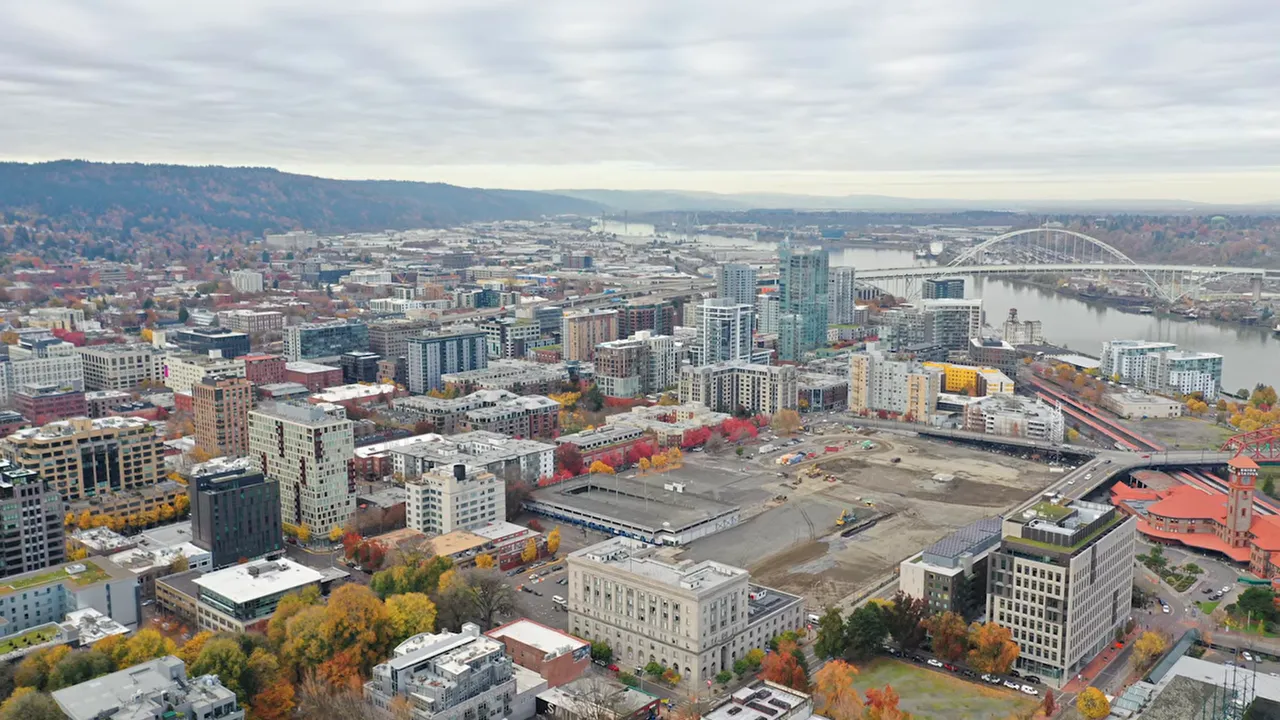
Still, we need to be candid. Downtown is not currently the automatic answer to “Where should we go tonight?” Foot traffic remains below pre-pandemic levels, restaurant and retail footprints have changed, and much of the metro's energy has moved into local neighborhoods and suburbs.
If the dream is a downtown condo with effortless weekly access to shopping, shows, dining, and street activity, we need to do a serious reality check before buying. This is one of the pros and cons of living in Portland that may not matter much to someone who prefers suburban living, but it can be decisive for a person seeking a classic dense urban lifestyle.
Pro 6: Neighborhoods and Suburbs Are Where Daily Life Happens
The good news is that Portland's center of gravity has not disappeared. It has spread out. The neighborhoods and suburbs are where so much of daily life is happening now.
Communities across the metro have built out their own amenities. Farmers markets are not limited to one central location. Most towns have their own weekend market, and wherever we land, we can usually find groceries, coffee shops, gyms, restaurants, parks, and everyday services within a few miles.
Food cart culture is another signature part of Portland life, and it is not confined to the core. Food cart pods, local restaurants, and community gathering places have expanded all over the metro.
This is why the final item among the pros and cons of living in Portland is a major positive for many households. The outdoors are close to home. The people are close to home. The food is close to home. We do not have to drive downtown to have a full life.
The Bottom Line on Portland
Portland is not right for everyone, and that is okay. The gray season, income tax, taxable retirement distributions, congestion, limited one-level inventory, and current downtown reality all deserve a place in the decision.
But the other side is substantial: no sales tax, a more manageable cost structure than some competing West Coast cities, strong equity potential for certain movers, exceptional outdoor access, beautiful summers, and connected communities where daily life is genuinely local.
The best way to evaluate the pros and cons of living in Portland is to get specific. We need to consider our income, desired home style, commute, retirement plan, weather needs, and the neighborhood where we will actually spend our ordinary Tuesday nights and Saturday mornings. For the right person, Portland remains one of the best places in the country to build a life.
Every move is different, and what works for one person may not work for another. If you're weighing the pros and cons of living in Portland, reach out anytime. We can help you compare neighborhoods, understand the local market, and find the area that best matches your lifestyle and priorities. Call or text: 503-804-1466
Frequently Asked Questions
Is Portland a good place to retire?
Portland can work well for retirement if we value outdoor access, comfortable summers, neighborhood amenities, and no sales tax. However, Oregon generally taxes pensions, 401(k) distributions, IRA withdrawals, and many annuity payments. Social Security benefits are not taxed by the state. A CPA should help us evaluate the full retirement-income picture.
Does Portland really have no sales tax?
Yes. Oregon has no state or local sales tax. The price on the sticker is the price paid, which can make a meaningful difference when furnishing a home, buying appliances, or making major purchases.
How difficult is traffic in Portland?
Traffic matters most for people commuting regularly, particularly through west-side bottlenecks around I-5, Highway 217, and U.S. 26. Retirees, remote workers, and people with flexible schedules may find it much less impactful.
Are Portland summers really dry?
Yes. August averages about 0.4 inches of rain across roughly three rainy days. Summer typically brings dry conditions, clearer skies, low humidity, and comfortable opportunities for patios, hiking, wine country, markets, and Gorge trips.
Is downtown Portland a good place to live?
It depends on the lifestyle we want. Downtown is pursuing a comeback through major investments and redevelopment, but it is not currently the primary weekend destination it once was. Anyone considering a downtown condo should spend meaningful time in the area and evaluate the current day-to-day experience before purchasing.