2026 is not shaping up to be just another year for the metro. A wave of new developments in Portland, Oregon is already changing how the city moves, how neighborhoods function, and where real estate momentum is quietly building.
Some of these projects are obvious, like the long-awaited finish line at PDX. Others are quieter but just as important, like health care expansion, suburban master-planned growth, and policy shifts that could reshape places like Lake Oswego for years. When we track new developments in Portland, Oregon, we are not just looking at shiny buildings. We are looking at how infrastructure, lifestyle, access, and demand start to intersect.
That intersection is where opportunity usually lives.
Why 2026 Matters for Portland Real Estate
We spend a lot of time helping buyers, sellers, and relocating families make data-driven decisions. One of the biggest mistakes people make is focusing only on current home prices without paying attention to what is changing around those homes.
Real estate does not move in a vacuum. It responds to airport access, medical investment, retail confidence, zoning pressure, commute reliability, and whether an area feels more complete than it did a year ago.
That is why these new developments in Portland, Oregon matter. They are not all equal, and they will not all affect every neighborhood the same way. But together, they give us a pretty clear picture of where Portland is heading.
1. PDX Airport Finally Finishes Its Major Overhaul
If you have been through Portland International Airport in recent years, you already know the experience has felt like navigating a construction puzzle. In 2026, that chapter is finally wrapping up.
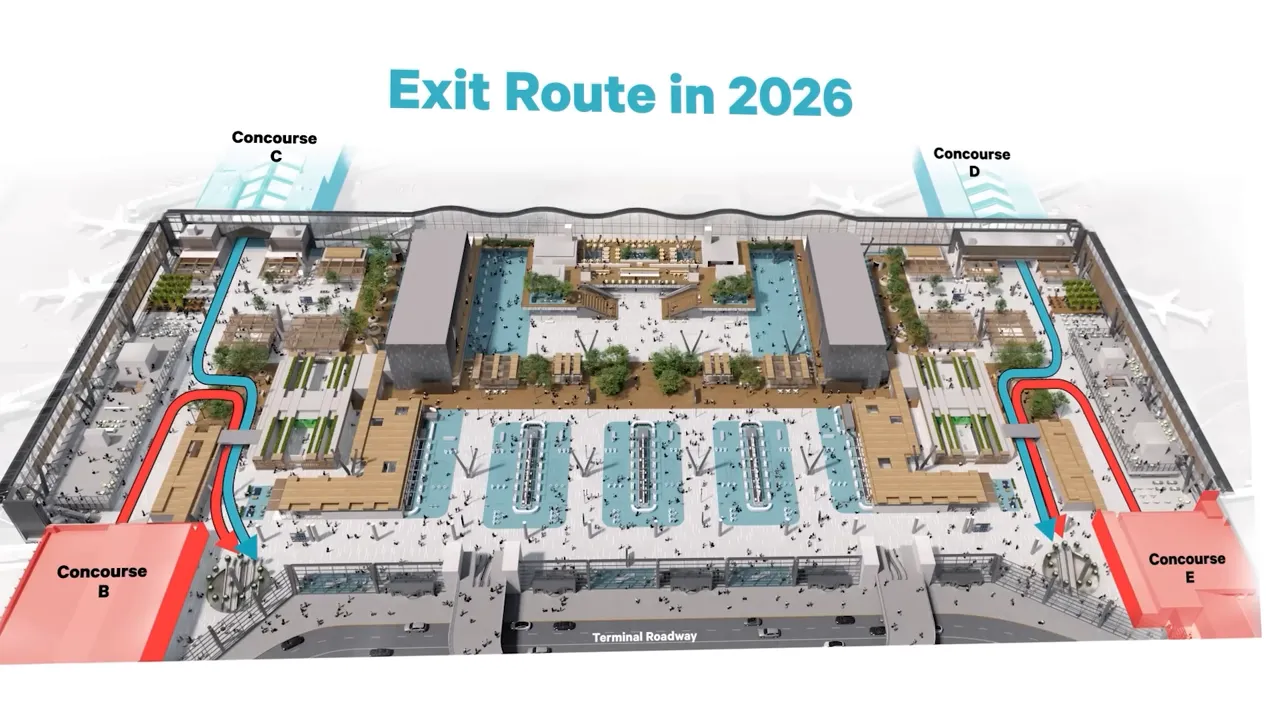
The second phase of the PDX Next expansion is set to finish, which means the airport can operate at full capacity with a fully modernized main terminal. That includes more permanent circulation features, cleaner exit routes, fewer temporary detours, and more direct movement from concourses to baggage claim.
In practical terms, that means:
- Less zig-zagging through temporary hallways
- Shorter, more intuitive paths after landing
- New retail and dining integrated into the airport experience
- A more polished first impression of Portland
This matters for more than convenience. Airports are economic anchors. When travel gets easier and more predictable, the metro feels more accessible to business travelers, relocating professionals, and families who need frequent out-of-state access.
We hear this all the time from people moving here. A good airport experience makes a city feel functional. And when a city feels functional, confidence goes up. That confidence often shows up later in housing demand.
2. The James Beard Public Market Starts Looking Real
This is one of the most exciting new developments in Portland, Oregon because it is about more than food. It is about downtown identity.
The James Beard Public Market has been discussed for a long time, and while the opening timeline has shifted into 2027, 2026 is the year it starts becoming visually real. Construction activity, facades, and streetscape changes are expected to become much more visible.
That visibility matters.
Downtown Portland has needed a cultural reset. Too much of the conversation has been centered on struggling office space and commercial softness. A project like this points the core in a different direction. It suggests a downtown built around gathering, eating, experiencing, and spending time there by choice, not just by work obligation.
If this project lands the way many expect it to, it could help:
- Increase foot traffic downtown
- Bring in more tourism and local activity
- Support nearby retail and residential leasing
- Improve confidence in downtown living
For urban homeowners, investors, and anyone considering a downtown condo or apartment lifestyle, visible momentum is not something to dismiss. Markets often respond before the ribbon cutting happens. Once the public believes something real is taking shape, behavior starts shifting.
3. OHSU’s Vista Pavilion Adds Medical Gravity
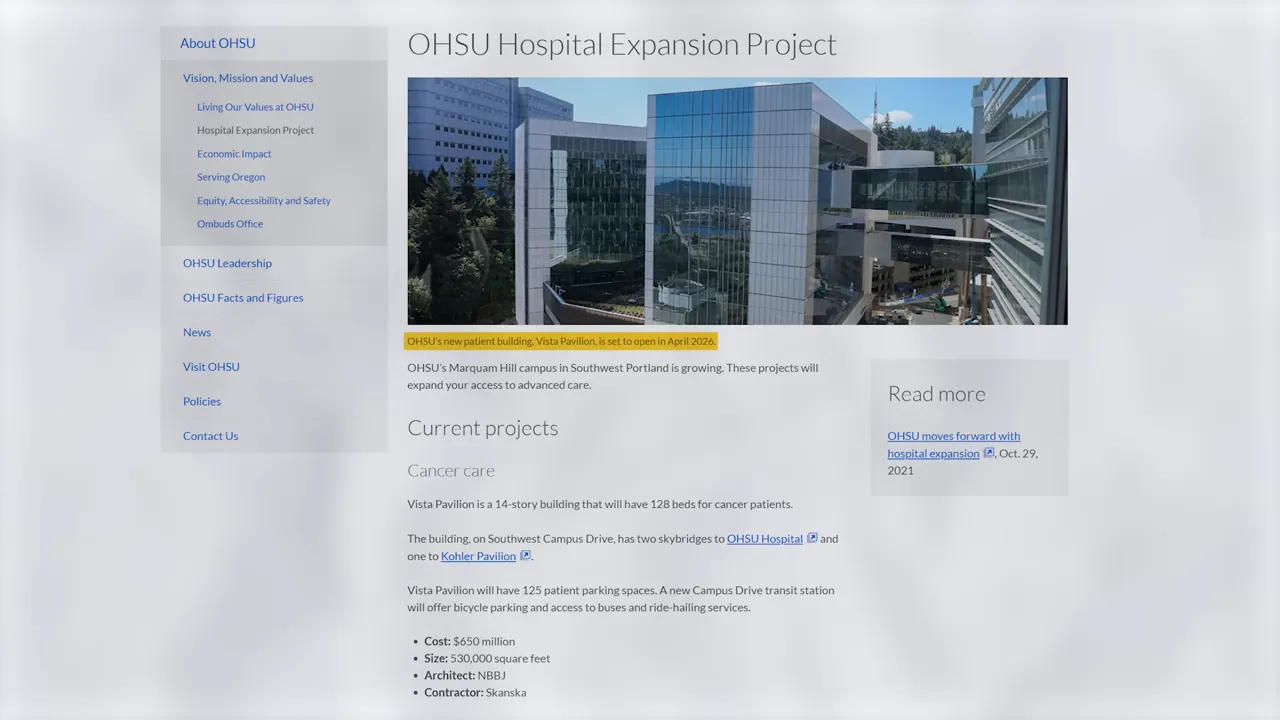
On April 7, 2026, OHSU’s Vista Pavilion is scheduled to open, adding 128 beds and reorganizing how the Marquam Hill campus functions. This is one of the most important institutional new developments in Portland, Oregon because health care growth has a long tail.
This is not simply one more building on a hospital campus. It is part of a much larger expansion of health care capacity in the region, supported by a historic investment from Phil Knight.
When health systems expand at this level, the impact goes beyond medicine. It can:
- Relieve capacity strain in emergency and specialty care
- Attract doctors, researchers, nurses, and support staff
- Increase housing demand near major employment centers
- Strengthen neighborhood services tied to long-term residents
Areas likely to feel this most include South Waterfront, Hillsdale, Multnomah Village, and close-in westside neighborhoods with access to OHSU.
Hospitals anchor communities in a way that is easy to underestimate. Families want access. Professionals want proximity. Employers often cluster nearby. That kind of gravity tends to influence real estate for years, not just for a season.
4. The Lloyd Center Reset Becomes Impossible to Ignore
The Lloyd Center story is no longer about trying to save an old mall. It is about replacing an outdated format with an entirely different kind of district.
In 2026, the area reaches a pivotal moment before large-scale demolition begins. The long-term plan includes roughly 5,000 housing units, a restored street grid, and the conversion of more than 30 acres of hardscape into walkable streets, parks, and usable open space.
That alone is major. But the district also has a planned music venue backed by Monqui and AEG, with groundbreaking expected in 2026 and an opening target in early 2027. A venue with a 2,000 to 4,000 person capacity changes the district rhythm in a big way.
Instead of a place that goes dead after retail hours, the vision becomes:
- Residents living in the district
- Parks active during the day
- Cafes and neighborhood services in the morning
- Concert traffic and event energy at night
That is how districts mature. Housing brings daily life. Entertainment brings identity. Transit access, bike infrastructure, and walkability make the whole thing more believable.
The Lloyd area is not a quick-flip story. It is a direction-is-now-clear story. And that is often the point when smart buyers and long-range investors start paying closer attention.
5. Washington Square Doubles Down on Experiential Retail
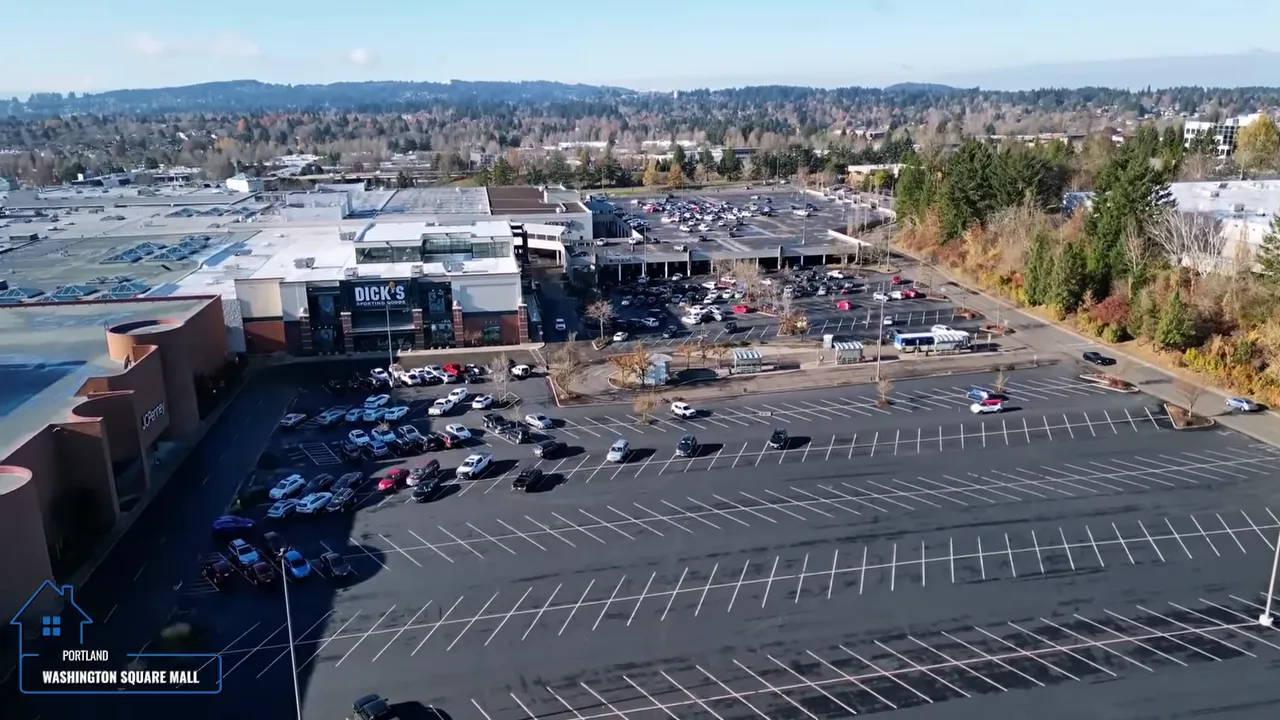
Out on the west side, the former Sears space at Washington Square is being demolished and replaced by Dick’s House of Sport, expected to open in 2027. During 2026, the construction activity will be hard to miss.
What makes this project interesting is that it is not just another retail replacement. It is an experience-based concept with features like an outdoor turf field, interactive equipment testing, and even climbing components inside the store.
Why does that matter?
Because traditional malls struggle when they are only places to buy things. The centers that remain strong are the ones that give people a reason to stay longer and bring others with them.
For Tigard and Beaverton, this reinforces Washington Square as one of the metro’s most durable retail corridors. From a housing perspective, strong retail hubs still matter. They signal long-term commercial confidence, neighborhood convenience, and overall stability.
When national brands put serious money into a flagship location, they are making a long-range bet on that area. Buyers notice that.
6. Kingston Terrace Offers a Rare Westside New Build Entry Point
Kingston Terrace, on the King City and Tigard edge, stands out because it is offering something increasingly rare on the west side: new construction that has not blown past the upper price bands many buyers are trying to avoid.
In a market where westside new builds often climb toward or above the $700,000 mark, this community has been offering four-bedroom homes in the high $500,000s to low $600,000s, with incentives active at the time of filming.
That matters for two reasons.
First, it creates a more approachable entry point for buyers who want modern floor plans, fresh construction, and westside location without stretching into the next pricing tier.
Second, this is the classic early-phase advantage in a master-planned environment. Buyers who enter before the retail is complete, before the parks are fully built out, and before the landscaping matures are often buying at the lowest relative point in the development cycle.
The tradeoff, of course, is living near ongoing construction for a while. But that is often where margin comes from.
For nearby resale sellers, this also creates real competition. If a buyer can compare an older resale home with a brand-new one nearby, pricing strategy becomes much more important.
7. Reed’s Crossing Enters Its Maturity Phase
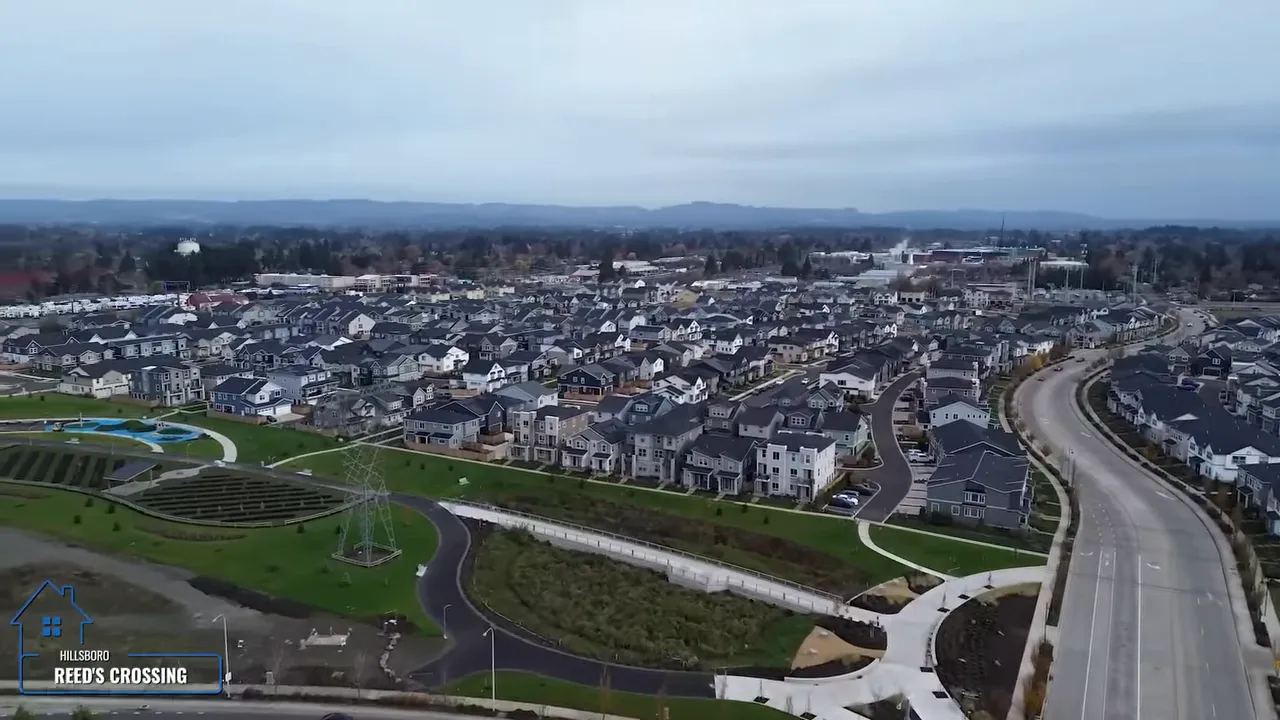
Reed’s Crossing in South Hillsboro has moved out of the “up-and-coming” category. It is entering the part of the cycle where the vision becomes lived reality.
The town center is filling in. Retail is opening. Schools are expanding. The community is beginning to function the way a fully planned neighborhood is supposed to function.
What makes Reed’s Crossing especially compelling is the intentional design. It includes about 15 miles of interconnected trails, parks integrated directly into neighborhoods, and retail positioned within walking distance rather than tucked behind a driving errand.
That kind of planning creates everyday rhythm. People bike. They walk to coffee. They run errands without treating every outing like a car trip. And from a long-term value perspective, communities built with that kind of daily usability often hold up well.
This area continues to appeal to buyers who want:
- Newer housing stock
- Access to the tech corridor
- Structured infrastructure instead of piecemeal growth
- A family-oriented long-term neighborhood feel
The question is not whether Reed’s Crossing is “good.” The better question is whether it fits how you want to live for the next three to five years.
8. Lake Oswego’s Housing Target Changes the Long Game
Some new developments in Portland, Oregon are physical projects. Others are policy changes that may have an even bigger long-term impact. Lake Oswego falls into that second category.
The state has more than doubled Lake Oswego’s required housing production target, increasing it from roughly 1,968 units to around 4,850 units. That is a dramatic shift for a city that has historically been constrained by low inventory, limited buildable land, and a strong preference for exclusivity.
This creates pressure in several areas:
- Expansion of middle housing such as duplexes, triplexes, cottage clusters, and townhomes
- More serious zoning conversations
- Potential infill and redevelopment in select neighborhoods
- A future supply picture that may not look like the past
This does not mean high-rise towers are about to appear everywhere. It does mean change is more likely in pockets that once felt fairly insulated from it.
For homeowners, this is not background noise. For buyers, it belongs in the long-range inventory math. If Lake Oswego becomes even modestly less supply-constrained over the next decade, appreciation patterns may evolve.
That is not a negative call. It is simply a reminder that desirable cities are not static. Policy and lifestyle demand eventually collide, and housing markets adjust.
9. Bridgeport Gets a Lifestyle Signal With Fogo de Chao
Not every meaningful shift is massive. Sometimes a single tenant tells us a lot.
Fogo de Chao has opened at Bridgeport, and that matters because it reinforces the center’s evolution toward a more curated, destination-oriented identity. This is not just quick-stop dining. It is the kind of place people choose for celebrations, business dinners, and event nights.
That kind of tenant supports a broader story. Bridgeport has been strengthening its mix for years, and this addition helps confirm its role as a westside lifestyle hub.
For surrounding neighborhoods, that can support:
- Stronger retail stability
- More high-income consumer activity
- Better long-term confidence in the immediate area
- Additional support for nearby resale values
Sometimes lifestyle momentum is subtle. But it still matters, especially when buyers are comparing locations based on convenience, dining, and where they actually spend their time.
10. The Abernethy Bridge Upgrade Reshapes Commute Logic
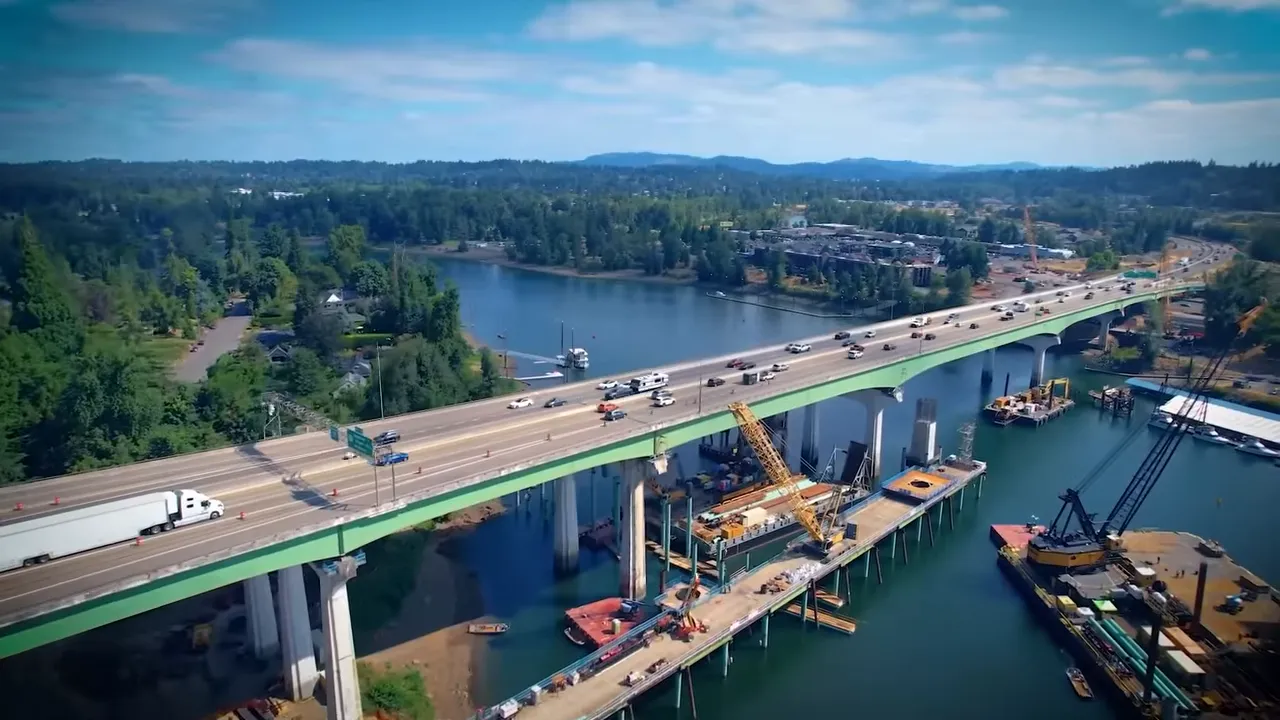
The I-205 Abernethy Bridge is expected to complete its seismic and widening improvements in late 2026. Construction and periodic closures continue in the meantime, but once this project is finished, the corridor should function differently.
The bridge links important commuter paths for West Linn, Oregon City, Lake Oswego, and surrounding areas. The upgrade improves seismic resilience, adds capacity, modernizes traffic flow, and boosts safety standards.
The real story here is commute reliability.
That is one of the most underrated drivers in real estate. When crossing a corridor becomes safer and more predictable, areas that once felt too annoying or too uncertain start becoming realistic options again.
That does not usually create instant price spikes. What it does create is a gradual shift in how buyers think about distance, daily schedule, and geographic flexibility.
People may choose a neighborhood based on schools, house style, or lifestyle. But they often stay based on whether the commute still feels sane six months later.
What These New Developments in Portland, Oregon Really Mean
The biggest takeaway is this: not every project affects the market the same way, but all of them contribute to a broader shift in how Portland functions.
Some neighborhoods will benefit from better access. Some will gain lifestyle amenities. Some will feel more pressure from new supply. Some will face temporary disruption before they get the long-term upside.
That is why strategy matters.
The most useful way to think about these new developments in Portland, Oregon is not as a list of headlines. It is as a map of momentum. Which projects improve daily life? Which ones add long-term desirability? Which ones create competition? Which ones open a buying window before everyone else sees the value?
Those are the questions that tend to lead to smarter real estate decisions.
If 2026 has a theme, it is this: Portland is not standing still. The city and its suburbs are being reshaped by infrastructure, health care, redevelopment, retail reinvention, and policy pressure all at once. For buyers, sellers, and relocating households, positioning ahead of that momentum is usually better than reacting after it becomes obvious.
FAQs About New Developments in Portland, Oregon
What are the most important new developments in Portland, Oregon for 2026?
The biggest projects include the completion of the PDX airport overhaul, visible construction progress on the James Beard Public Market, OHSU’s Vista Pavilion opening, the Lloyd Center redevelopment, Washington Square’s experiential retail expansion, growth at Kingston Terrace and Reed’s Crossing, housing policy shifts in Lake Oswego, the Bridgeport dining upgrade, and the Abernethy Bridge improvements.
Will these new developments in Portland, Oregon affect home values?
Many of them can influence values over time, but not always in the same way. Some projects improve convenience and lifestyle appeal, some increase local demand, and others may add future housing supply. The effect depends heavily on the neighborhood, the type of property, and the time horizon.
Which Portland-area neighborhoods may benefit most from OHSU’s expansion?
Neighborhoods with strong access to OHSU are likely to feel the impact most, especially South Waterfront, Hillsdale, Multnomah Village, and nearby westside areas. Medical employment hubs often create stable, long-term housing demand.
Why does airport improvement matter for the Portland housing market?
Airport quality influences how people experience a city. Smooth travel supports relocation, business activity, and overall metro perception. For households that travel often, airport function can be a major factor in deciding where to live.
Is downtown Portland likely to improve because of the James Beard Public Market?
It has the potential to help significantly because it supports a more active, lifestyle-driven downtown. Projects that create reasons to visit, gather, dine, and linger can improve foot traffic and strengthen confidence in the city core before they even open.
What is the real estate significance of Lake Oswego’s new housing target?
It signals that Lake Oswego may face more pressure to allow additional housing types and density over time. That could gradually change supply dynamics in a city that has historically been very constrained, which may influence appreciation patterns over the next decade or more.
Read More: Portland's Best and Worst Suburbs (Ranked by Budget Instead of Hype)